English
 Español
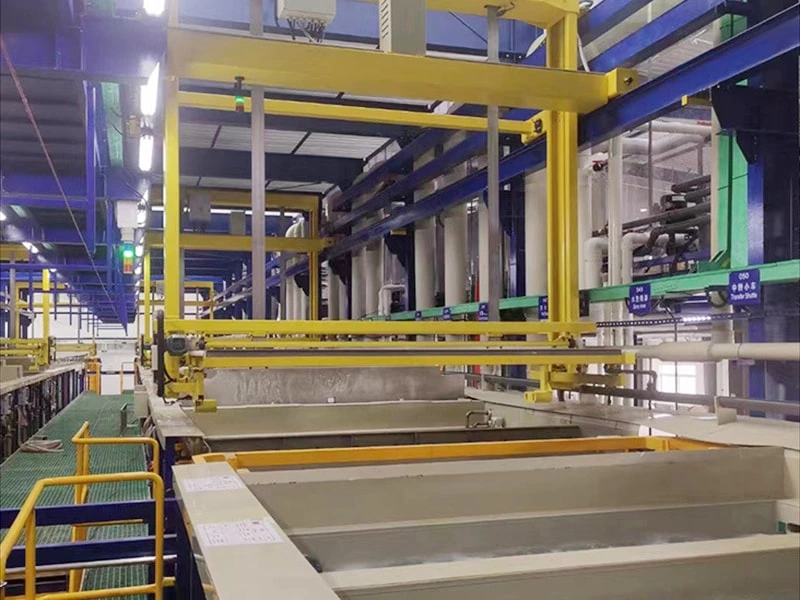
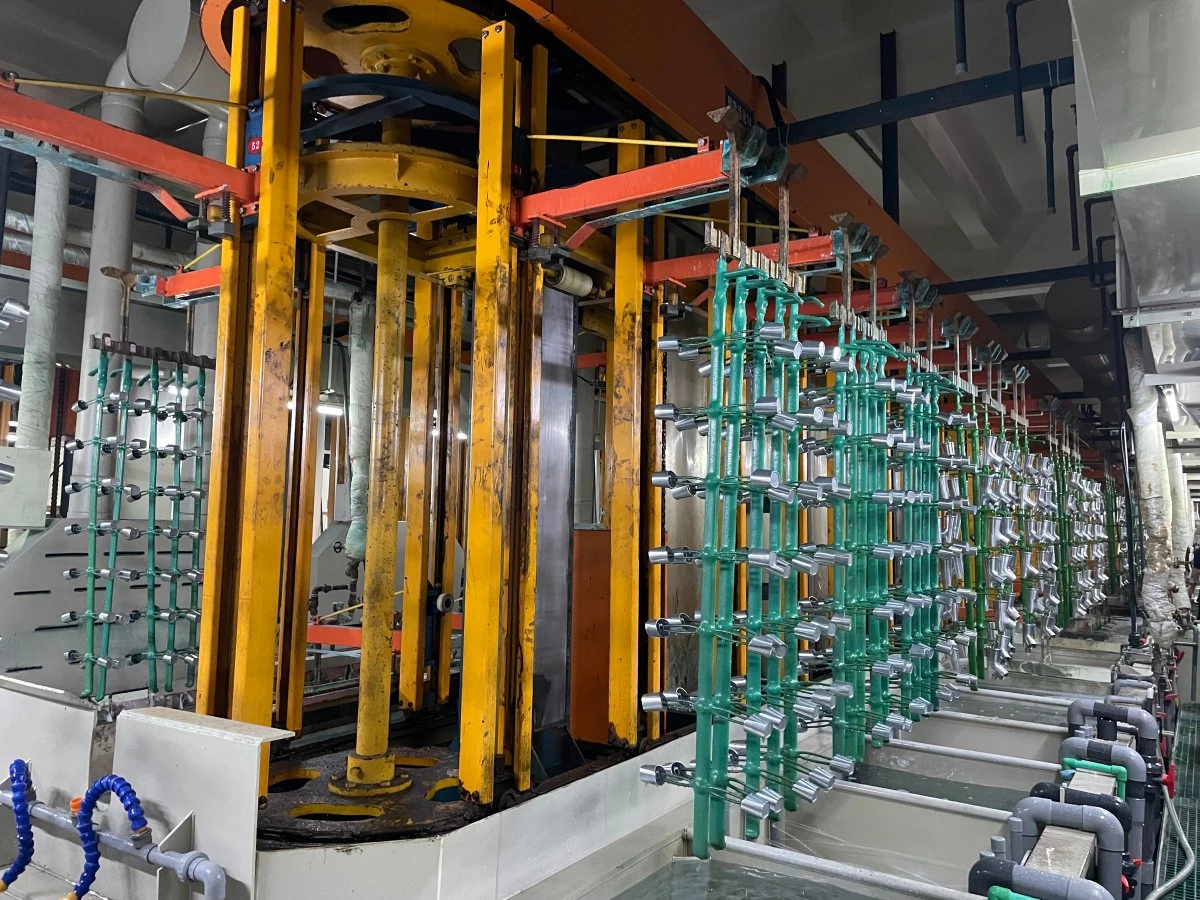
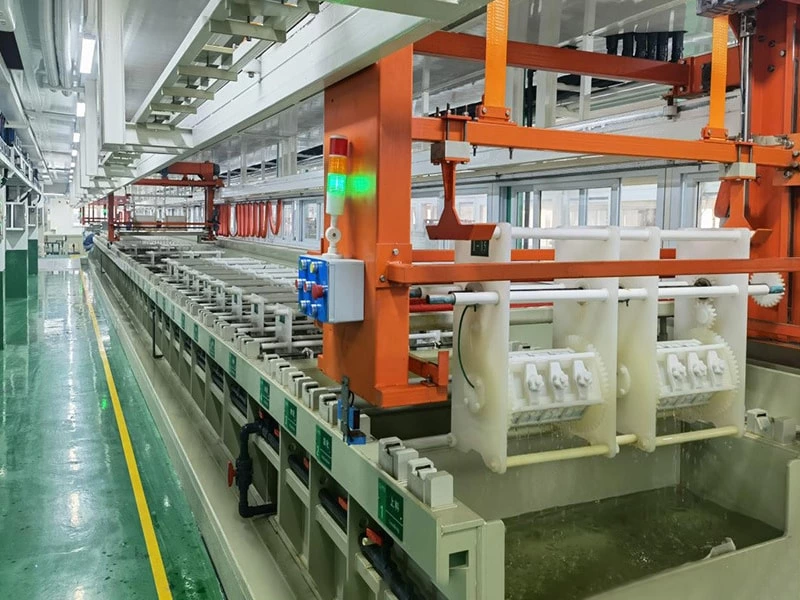
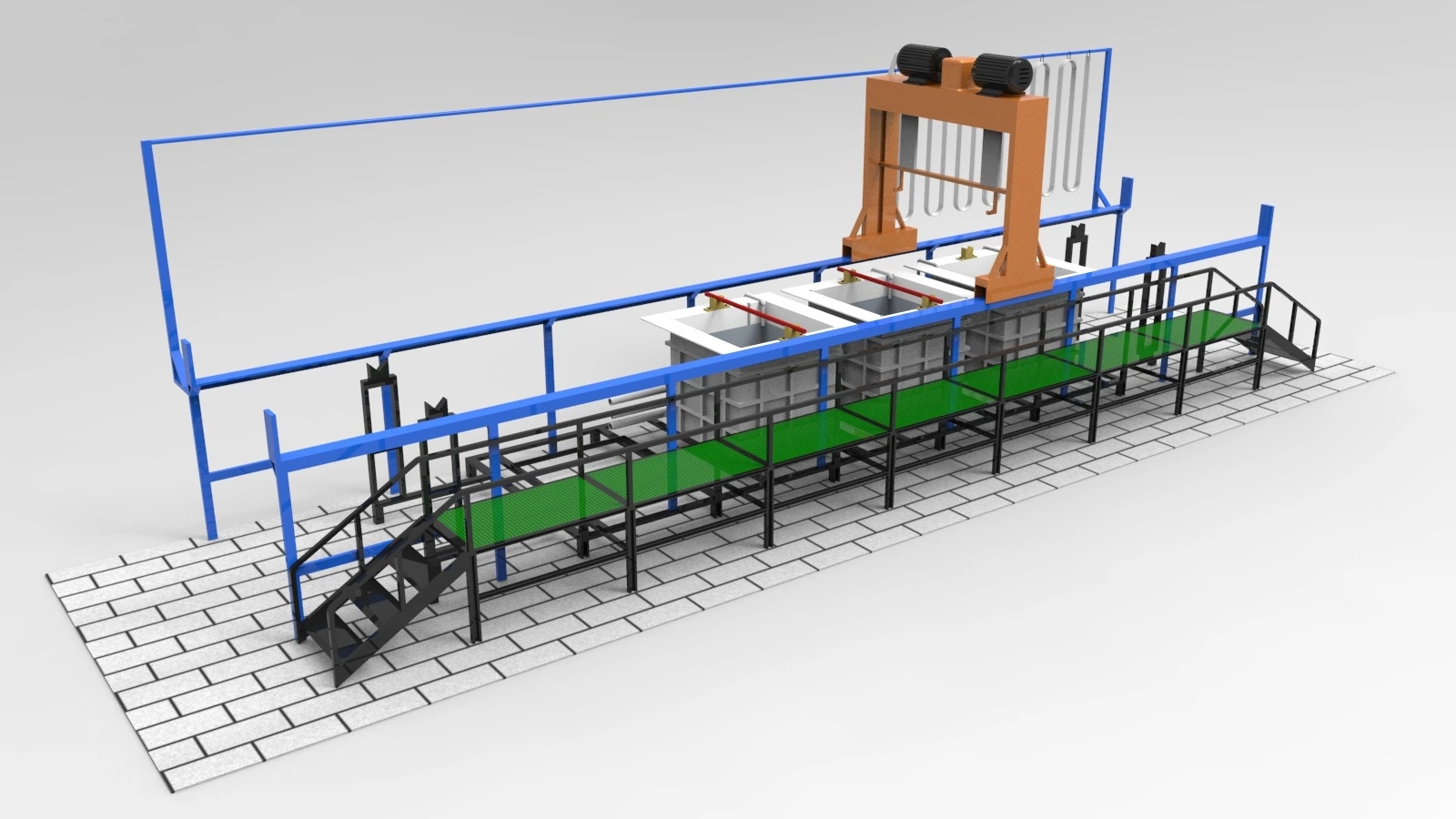
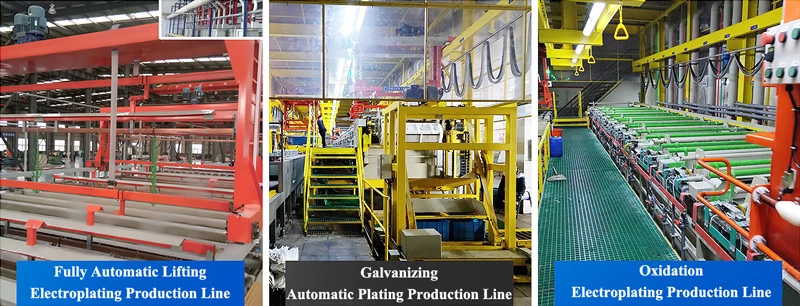
Copper Alloy Bathroom Fittings Electroplating Production Line
Status and Core Value
1. Status: The electroplating production line for copper alloy bathroom fittings occupies a dual position as both the 'heart' and the 'showcase' of the entire manufacturing process.
Internally (from a manufacturing perspective): It serves as a critical strategic hub with the most intensive resource input, the most complex technical controls, and the highest concentration of quality risks. It fundamentally determines a factory's technical capability, cost efficiency, and delivery reliability.
Externally (from a market perspective): It serves as the ultimate shaper of a product's visual quality, functional performance, and brand value. Directly linked to consumers' sensory experience and trust, it represents the final and most critical process in determining a product's success and market position.
2. Core value: This production line is a critical system that transforms brass and bronze blanks into final products characterized by "high gloss, corrosion resistance, and a luxurious appearance." It determines a product's "aesthetic appeal, durability, added value, and brand competitiveness," serving as the core technological guarantee for the bathroom hardware industry's transition from "manufacturing" to "precision manufacturing."
Therefore, investing in and operating an advanced, stable, and environmentally friendly electroplating production line for copper alloy bathroom fittings is not only a reflection of manufacturing capability but also a strategic decision—and a symbol of core competitiveness—for a company committed to building a premium brand and pursuing long-term, sustainable development.
Specific Value and Operational Characteristics of Equipment in Each Stage
Stage I: Pre-Treatment (The Foundation of Quality)
1. Copper Descaling Tank (Capacity: 3 Racks)
Value: This step can perfectly restore the material's original surface condition and properties without harming the mechanical strength or dimensional accuracy of the base metal part. It prepares an "atomically clean" and active surface status for plating, ensuring strong bonding of the following coating layers and improving both the quality rate and production efficiency of the electroplating process.
At the same time, it can also prevent hidden defects, improve the adhesion (making the coating really "stick"), ensure consistent appearance, and avoid issues like localized dullness or uneven gloss caused by tiny remnants of oxidation scale. Additionally, by reducing the electroplating defect rate, it minimizes copper ion contamination from dissolved scale, slows down the buildup of impurities in the plating bath, and reduces the frequency of bath purification.
2. Hot Degreasing Tank (Capacity: 6 Racks)
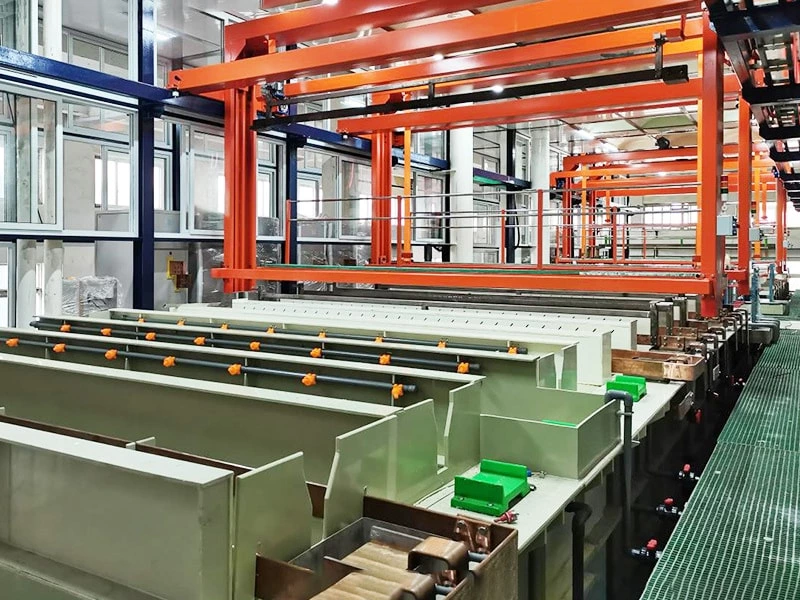
Hot degreasing, also known as hot immersion degreasing. It significantly reduces the viscosity of oil and enhances its liquidity through elevated temperatures (typically 60–90°C). Simultaneously, alkaline degreasing agents engage in chemical reactions such as saponification (Wherein the Alkali breaks down the oil), emulsification (Making water and oil dissolve into each other), and dispersion (turning the oil into tiny particles suspended in the liquid, making it easy to rinse or treat). With the oils under high-temperature conditions.
This synergistic "thermochemical" effect ("Heat" and "chemical reactions" work together, help each other out, and double the effectiveness) effectively breaks down stubborn oil film. It strips them from the workpiece’s surface. This process lays the groundwork for the effectiveness of subsequent cleaning steps, such as ultrasonic and electrolytic cleaning.
Its value is reflected not only in the immediate cleaning results but also extends throughout the entire chain—ensuring the stability of subsequent processes, the reliability of coatings, environmental compliance, and long-term operational costs. It serves as an indispensable core pre‑treatment step in high‑end electroplating lines.
3. Ultrasonic Wax and Oil Removal Tank (Capacity: 3 Racks)
Value: The microscopic high-pressure shock waves generated by ultrasonic "cavitation" (By generating bubbles in liquid through ultrasonic waves, the immense energy released from the "instantaneous explosion" of these bubbles achieves effects such as cleaning, crushing, or destruction)can penetrate and act on every tiny surface of the workpiece, achieving "dead‑angle‑free" cleaning.
The ultrasonic wax and oil removal tank can replace manual scrubbing, reduce chemical consumption, shorten the production cycle, lower wastewater treatment load, and extend the service life of the bath solution.
It thoroughly removes polishing wax and oils left after copper alloy die‑casting or machining, providing an absolutely clean base for the next steps. This significantly reduces batch quality risks caused by poor pretreatment and directly improves the product pass‑through rate and economic efficiency.
4. Cathodic and Anodic Electrolytic Tanks (Capacity: 2 Racks)
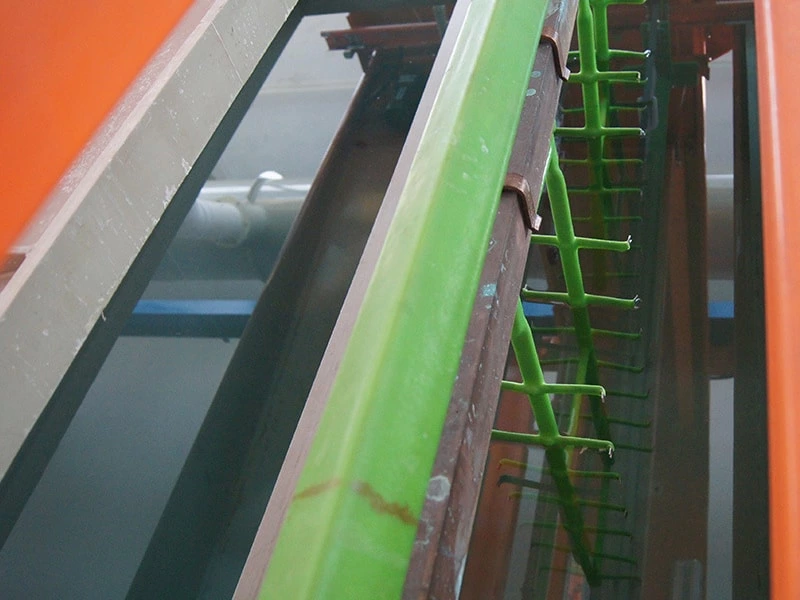
Value: Anodic electrolysis effectively removes surface residues and provides a uniform conductive base for plating, while cathodic electrolysis enables deep degreasing of workpieces and can eliminate sub‑micron particles embedded in the substrate, preventing defects such as pitting and peeling caused by impurity migration during service.
By combining and optimizing the parameters of both methods, the electrochemical action uniformly covers the entire conductive surface, eliminating the inconsistencies inherent in manual scrubbing or immersion cleaning. This approach perfectly avoids the risks associated with using a single mode, further removes residual organic matter, and achieves surface activation.
5. Electrolytic Activation Tank
Value: Even after thorough cleaning, metal rapidly forms a monolayer-scale oxide film or adsorption layer in air or during rinsing. The electrolytic activation tank uses an instant, controllable electrochemical dissolution process to completely remove this "fresh" passive film, exposing the underlying metal lattice in a highly reactive atomic state. After activation, the surface achieves extremely high chemical uniformity, preventing defects such as discontinuous plating, dull spots, and cloud patterns caused by localized passivation.
It also allows for minor fluctuations in pre‑treatment (e.g., delayed drying or water quality deviations), as the activation tank can promptly restore the surface condition in real time, thereby reducing strict reliance on earlier process steps.
Furthermore, it prevents passivated surface impurities from continuously dissolving into the plating bath, lowering the risks of abnormal metal ion consumption and additive decomposition. This ensures the formation of a final plating layer that is uniform and free of any missed spots.
Stage II: Nickel Plating
1. Multi-layer Nickel Electroplating System (Matte Nickel: 3 Racks + Bright Nickel: 6 Racks)
Value: Multi‑layer nickel plating is the soul of high‑end bathroom electroplating. Matte nickel offers excellent corrosion resistance, while bright nickel delivers an ultra‑smooth, glossy finish. The designed potential difference between the two layers creates electrochemical protection, redirecting the path of metal corrosion and achieving "long‑term durability through micro‑corrosion," significantly extending the product's corrosion resistance in humid environments.
Moreover, the asymmetric capacity configuration of "3 racks for matte nickel + 6 racks for bright nickel" achieves the optimal deposition rhythm for both layers. This system simultaneously provides the product with electrochemical protection, a physical barrier, and an aesthetic foundation, while ensuring exceptionally high coating adhesion and reliability.
Stage III: Chromium Plating
1. Chrome-Preparation Electrolytic Tank (Capacity: 2 Racks)
Value: The nickel surface quickly forms a 2–3 nm thick layer of nickel oxide (NiO) in the air. The pre‑chromium electrolytic tank uses ultrafast electrochemical reduction to turn this layer into soluble ions, removing this hidden barrier and ensuring the chromium coating covers completely. Through this pre‑chromium electrolysis, the nickel layer is activated, and leftover organic additive residues trapped in the tiny pores of the nickel are cleared out, which improves both the adhesion and corrosion resistance of the chromium layer.
Once activated, the nickel layer helps stabilize the production process, cutting down on rework and scrap. This creates a "seamless, fast, and active" transition from the nickel layer to the chromium layer, keeping production flowing smoothly. The whole treatment is very quick—usually done in under 60 seconds—gently and evenly activating the nickel surface without harming the nickel itself.
2. Chromium Electroplating Tank (Capacity: 4 Racks)
Value: Chromium has extremely high hardness, a low friction coefficient, and chemical inertness—far exceeding copper and nickel. This allows the chromium electroplated layer to deliver outstanding wear and scratch resistance, a smooth outer surface, and excellent resistance to alkalis, atmospheric conditions, and weak acids.
It effectively withstands chemical corrosion from hard water scale, shampoo, and cleaning agents, maintaining its luster without tarnishing over time. In just a micron‑thin metal layer, it integrates three key functions: optical decoration, chemical protection, and mechanical defense.
Additionally, the thermal expansion coefficient of the chromium layer matches that of the underlying nickel‑copper substrate, so it stays wrinkle‑free and crack‑free under thermal cycling from ‑20 °C to 120 °C, ensuring excellent thermal shock stability.
Stage IV: Post-Treatment and Auxiliary Systems
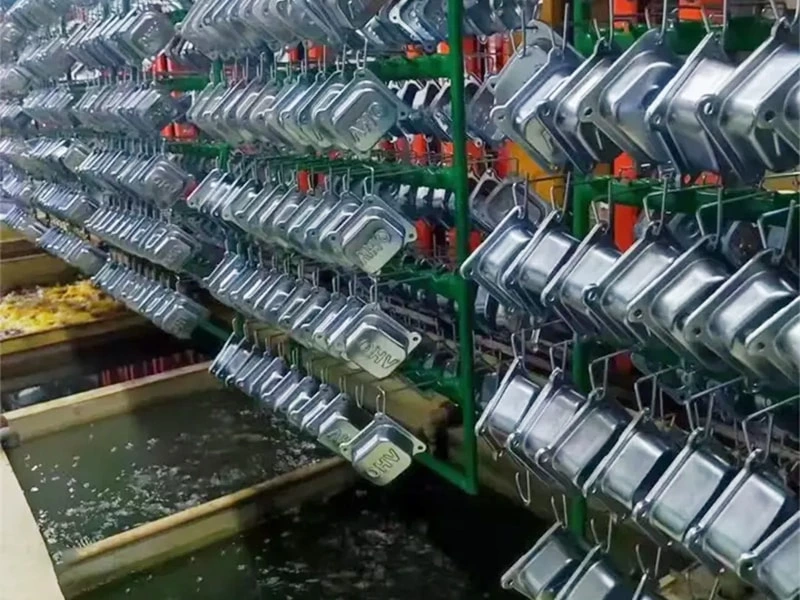
1. Multi-stage Countercurrent Rinsing System (Integrated throughout the production line):
Value: By applying the "cascading reuse" principle, the workpieces move from the dirtiest tank of the plating line toward the cleanest one, allowing every unit of fresh water to be reused multiple times. This ensures that in the final rinsing stage, the workpieces come into contact with nearly pure water, effectively preventing defects such as water stains, spots, discoloration, and poor adhesion caused by insufficient rinsing, while drastically cutting down wastewater discharge and treatment load from the source.
The fluid shear force generated by the countercurrent flow continuously refreshes the water film on the workpiece surface, increasing cleaning efficiency by 4–6 times compared to traditional static soaking. It also isolates cross‑contamination between process tanks, preventing plating bath contamination caused by the transfer of acids, alkalis, or metal ions.
2. Pure Water Preparation System
Value: Pure water ensures the purity of the plating solution by preventing impurities such as calcium, magnesium, and chloride ions from contaminating the bath, thereby avoiding defects like pinholes, roughness, and poor adhesion in the coating. It also enhances cleaning effectiveness by thoroughly removing residual ions from the workpiece surface, eliminating water stains and spots.
Overall, this reduces rework and waste, saves overall water usage costs, and cuts down on maintenance expenses caused by issues like scaling. In short, it’s an unsung hero that keeps the plating solution stable and the products flawless.
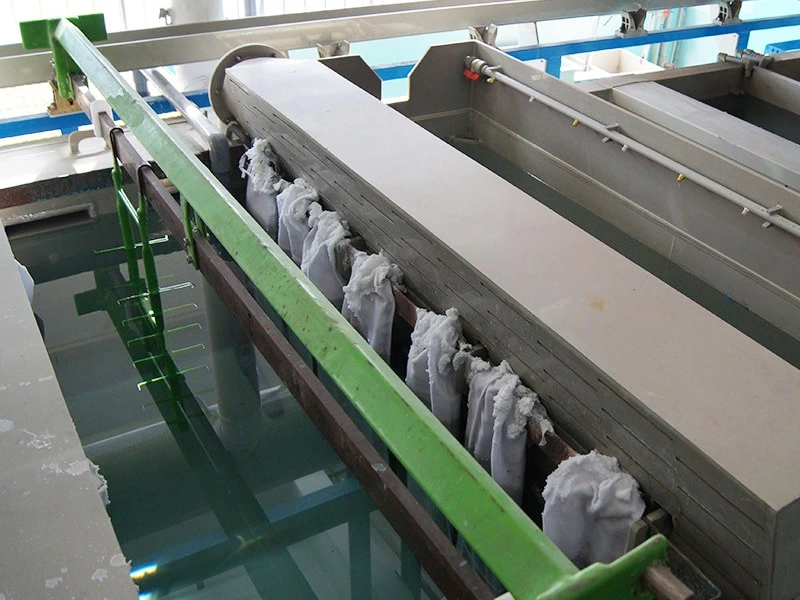
3. Wastewater Treatment System – Recovery and Reduction Tanks (Capacity: 2 Racks):
Value: The recovery tank can directly collect high‑concentration, high‑value plating solution carried out by workpieces from the main plating tank, significantly reducing the amount of pollutants discharged into the wastewater system from the source, thereby lowering the load and difficulty of final‑stage wastewater treatment. The reduction tank specifically targets the most toxic and strictly regulated pollutants in electroplating—hexavalent chromium and cyanide.
Together, they serve as the "resource‑recycling front end” and the“pollution‑cutting front end" of the production system. This upgrades wastewater treatment to a model of "detoxifying harmful substances while recovering resources," which together takes pressure off the final treatment stage and balances economic gains with environmental responsibility.
4. Plating Workpieces Cleaning System — Ultrasonic Tank (Capacity: 2 Racks), Hot Water Rinse, and Blower
Value: Ultrasonic tanks tackle "incomplete cleaning," hot water rinsing handles "residual debris," and blowers address "secondary contamination." Together, they ensure that every workpiece enters the electroplating tank in an "atomically clean, zero-moisture, zero-pollution" state, acting as the invisible guardians of high-end coating quality.
By working in synergy, they eliminate water stains and spots on workpiece surfaces, significantly improve drying efficiency while reducing energy consumption, prevent water stains and secondary contamination, enhance pretreatment reliability, and boost production pace. With precise control of temperature and cleaning time, they achieve optimal cleaning results without damaging the workpieces.
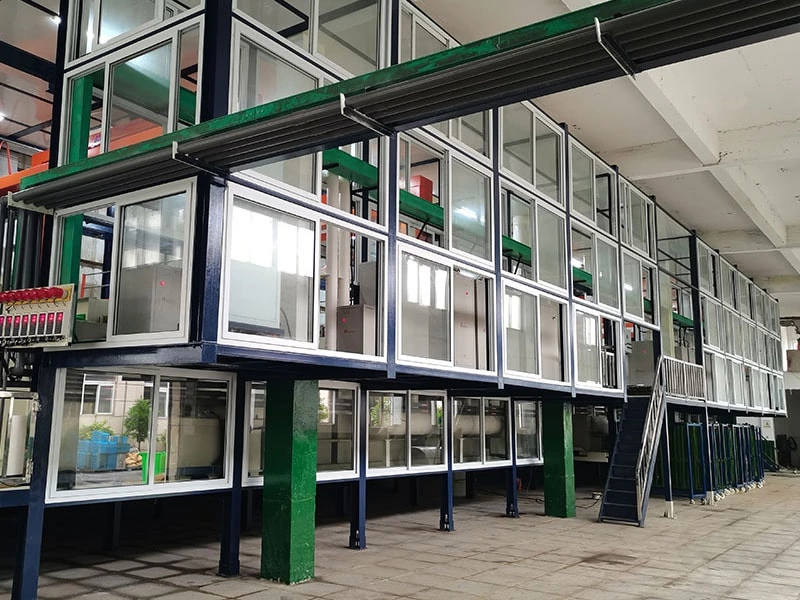
5. Drying System — Bread‑Oven Style Hot‑Air Drying Oven
Value: The equipment ensures consistent processing results by enabling hot air to circulate rapidly and uniformly inside the chamber through a blower and a carefully designed air duct system. It is also equipped with multiple safety features, including overtemperature protection, leakage protection, and blower overload protection, ensuring safe operation even during long periods of unattended use.
Furthermore, the interior is fitted with multi‑layer stainless steel racks or trays that allow for batch loading and unloading via material carts or hanging baskets, significantly improving handling efficiency and reducing manual labor intensity.
Application Scenarios
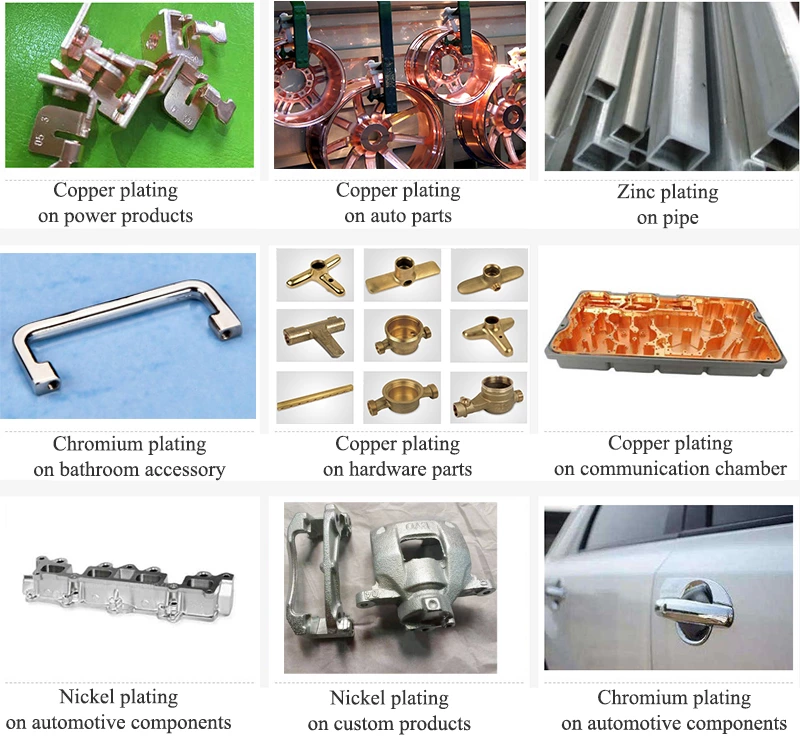
This production line is suitable for the following market products:
1. Shower Equipment Manufacturing: Basin faucets, kitchen faucets, bathtub faucets, showerhead bodies, thermostatic valve bodies, shower columns, etc.
2. Bathroom Accessories and Hardware Manufacturing: Towel racks, towel rings, toilet paper holders, shelves, hooks, and other bathroom metal fittings.
3. Valve and Pipe Fitting Manufacturing: Angle valves, water distributors, decorative caps, and other pipeline connectors.
4. Architectural Hardware and Furniture Hardware: Door and window hardware, cabinet and furniture hardware, and public building hardware.
5. Professional Instruments and Medical Devices: Instrument panels, non-contact parts of surgical instruments, diagnostic equipment housings, etc.
Plating Production Line Advantages
1. Exceptional Quality: Utilizing the classic "nickel + chromium" multi-layer system, it achieves mirror-like gloss, superior corrosion resistance (high salt spray test rating), and long-lasting brightness retention.
2. High Consistency: Automated control (PLC, precision power supplies, temperature control, etc.) ensures uniform appearance and performance across mass-produced items.
3. High Added Value: Transforms ordinary copper components into high-margin products with a luxurious quality feel.
4. Environmental Compliance: Integrates comprehensive recovery, pure water, and wastewater treatment systems to meet stringent environmental regulations.
5. Technological Moat: The complex process management and quality control systems create technical barriers that are difficult for competitors to replicate.
Conclusion
The copper alloy bathroom fittings electroplating line is a complex system engineering project that integrates "precision electrochemistry, advanced mechanical automation, green environmental technology, and lean production management."
At the micro level, it pushes metal protection to the limits of physics and chemistry through atomic‑level surface engineering.
At the meso level, it breaks the historical dilemma of the electroplating industry—"high pollution and high energy consumption"—with a green closed‑loop manufacturing approach.
At the macro level, it serves as the core engine enabling companies to transition from being mere "component processors" to becoming "brand technology partners."
Far more than just a series of arranged tanks, it is a "value‑creation engine":
1. Technologically, it pushes the protective and decorative properties of materials to their limits through a progressive, interlocking series of processes.
2. Economically, it directly supports brand premium and market competitiveness by consistently producing highly reliable, high-sensory-quality products.
3 . In terms of sustainable development, it achieves a balance between economic efficiency and environmental responsibility through resource recovery and end-of-pipe treatment.
Investing in and operating such a plating production line signifies that a company has chosen a development path of "high-end positioning, brand-building, and green transformation."
The overall value of this plating production line lies in its systematic and predictable transformation of cold chemical principles, metal materials, and capital investments into aesthetically desirable products sought by the market, durable quality trusted by consumers, environmentally compliant green manufacturing, and corporate core competitiveness recognized by investors.
It is a model of the successful integration of modern precision manufacturing and business achievement.