English
 Español

Electroplating Hoist Selection for Automatic Plating Lines
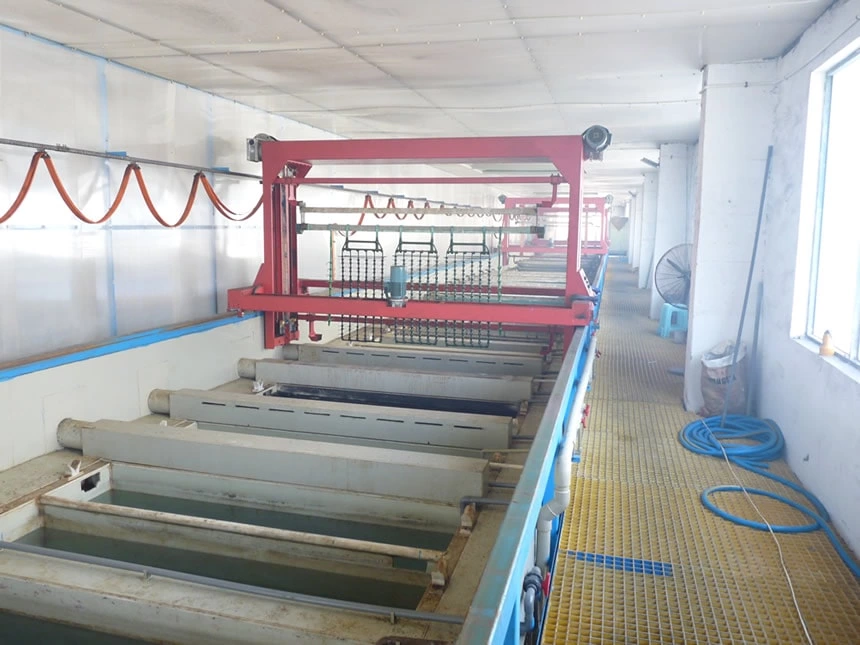
An electroplating hoist moves loaded racks or barrels between treatment tanks. Its lifting capacity, movement pattern and control functions need to match the production process so that each load reaches the correct station within the approved time window.
For an automatic rack electroplating line or a barrel electroplating line, hoist selection should begin with the complete load, process sequence and workshop layout. These inputs allow the equipment supplier to check how the transfer system will support the required output.
Define the Complete Load to Be Lifted
Prepare a load sheet for each representative product family. Record the weight and dimensions of the parts, rack or barrel, lifting bar and any attachments carried by the hoist. Include an allowance for liquid retained during withdrawal, based on the actual loading and drainage arrangement.
For rack plating, specify the fully loaded rack dimensions, support points and any uneven weight distribution. For barrel plating, include the barrel assembly and its contents, together with the permitted loading range. The allowable parts load also depends on the barrel process and should be confirmed separately.
Ask the supplier to state exactly what its quoted lifting capacity includes. Routine loads, the heaviest expected load and the largest load envelope should all be identified before the handling equipment is selected.
Match the Hoist Arrangement to the Tank Layout
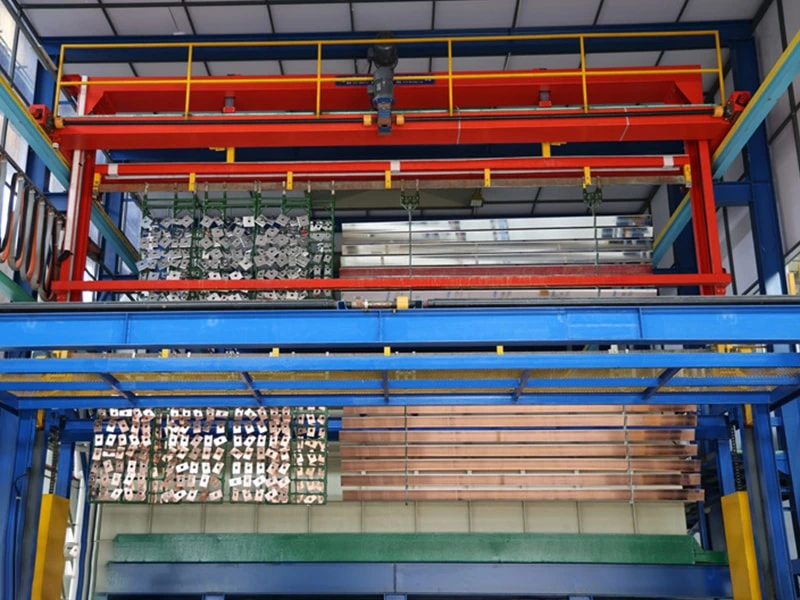
Gantry, overhead and side-arm hoists use different supporting and lifting arrangements. Their suitability depends on tank width, load dimensions, available headroom, structural support and access around the line.
Review the complete travel envelope on the proposed layout. Allow space for lifting a load clear of the tank, passing exhaust hoods and pipework, and lowering it onto the receiving supports. Include room for load movement during acceleration and stopping.
The arrangement should also suit loading, unloading and maintenance. A transfer path that fits above the tanks may still conflict with a loading station, a building column or the space needed to remove a drive assembly.
Check the Full Transfer Cycle Against Production Demand
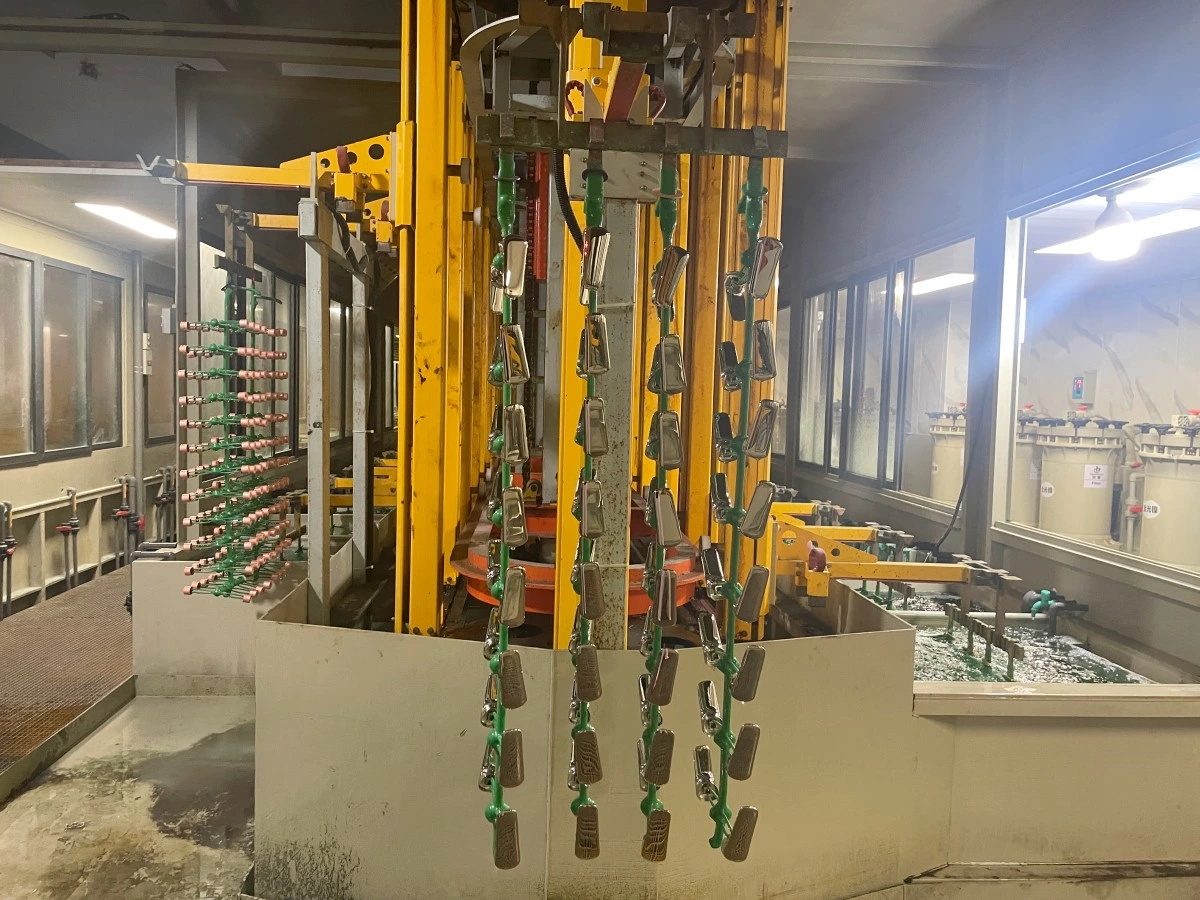
The movement schedule should include picking up the load, lifting, draining, horizontal travel, lowering, releasing and returning for the next move. Position confirmation and any required waiting time also occupy the hoist.
Request a time chart for the intended production mix. It should show tank entry and exit events, transfers between distant stations, empty movements and the interval between incoming loads. Review the schedule alongside the electroplating line capacity calculation.
For example, two proposals may list the same maximum travel speed but use different acceleration settings, lifting heights and drain times. Their achievable dispatch intervals can therefore differ. Compare the complete operating cycle under the agreed load conditions.
Specify Withdrawal and Drip Control by Process Stage
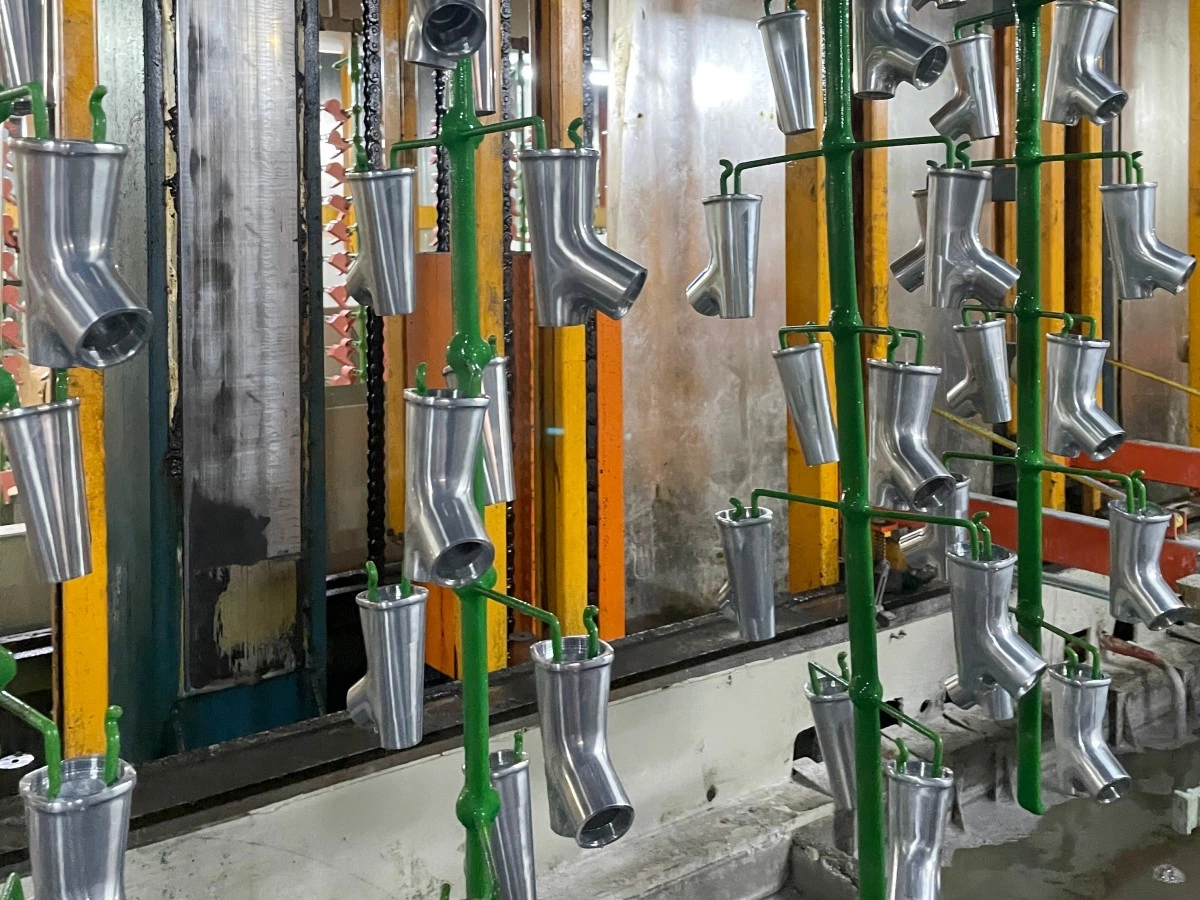
Withdrawal speed and drain time influence how much solution is carried to the next tank. Define these settings with the process owner for the actual parts, loading orientation and chemistry.
A part with recesses or tubes may retain liquid differently from an open, flat component. A loaded barrel also has its own drainage behavior. Where the process allows it, a controlled pause above the source tank can help return liquid before transfer.
Review any drip tray as part of the movement sequence. Confirm when it opens and closes, where collected liquid goes, and whether it can interfere with the rack or barrel. Set limits for delays between stages where surface condition or treatment time is sensitive.
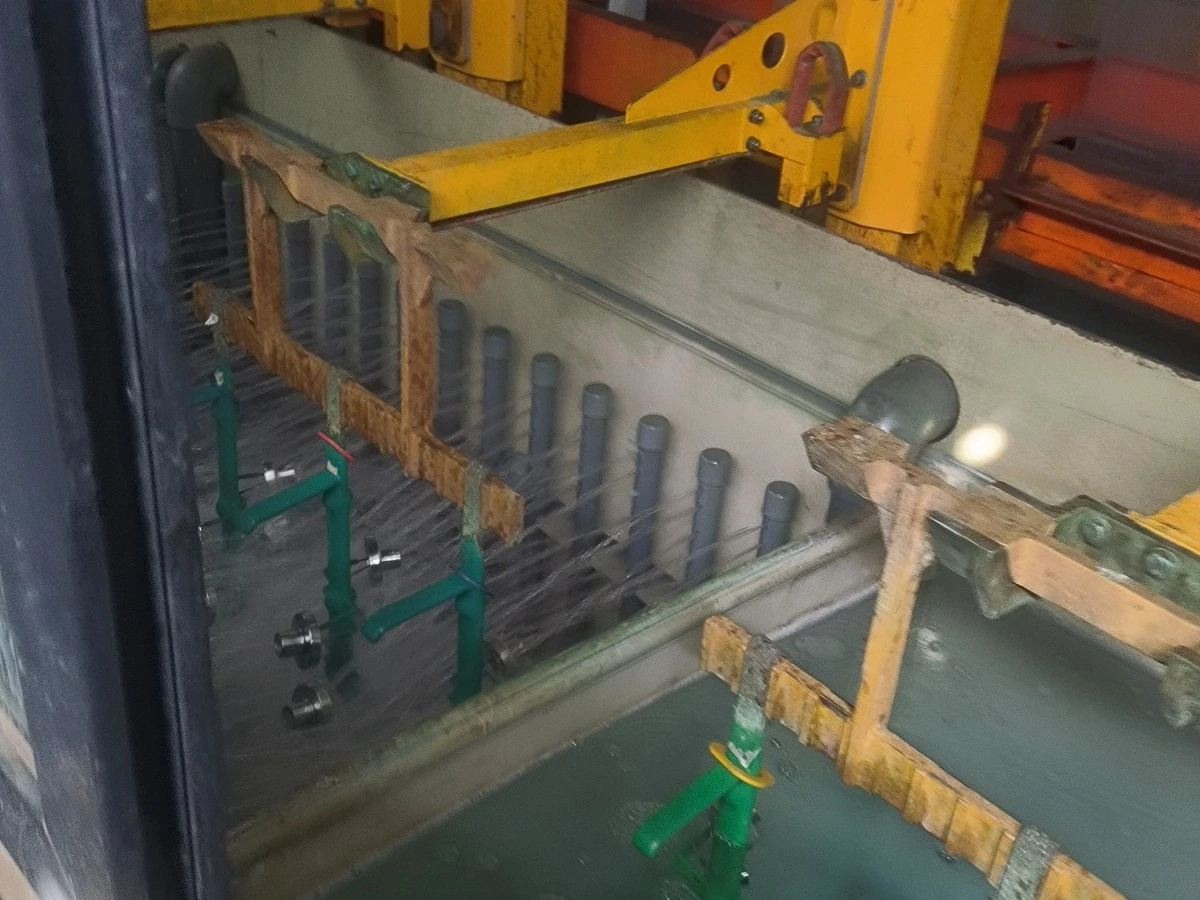
Coordinate Multiple Hoists and Shared Stations
Where several hoists serve one line, define their operating zones, shared stations and load handover points. The schedule should show how they avoid blocking one another while meeting the required treatment times.
Ask the supplier to review the planned recipe combination, including different routes or dwell times if mixed production is required. Loading, unloading and shared rinse stations should be included in that review.
Also establish what happens when one hoist stops. Define which loads may remain in their current stations, which require attention and how production staff will identify affected batches. Any reduced-capacity operating mode needs a separate review of the available handling route and process limits.
Define Control Feedback and Service Access
The control specification should identify how the system confirms hoist position, load engagement and readiness of the receiving station. It should also define coordination with tank covers, barrel drives, rectifiers and other connected equipment where applicable.
Through the electroplating line PLC control system, operators should be able to identify the active load, current movement and reason for a stopped sequence. Specify the required alarms, operating permissions and recovery procedure.
Review service access at the same time. Drives, lifting components, sensors and electrical connections need inspection and replacement space. State the expected mist, humidity and splash exposure so that the supplier can select suitable protection and maintenance provisions.
Agree on Hoist Acceptance Checks Before Shipment
Turn the agreed specification into a test plan. Checks may cover load pickup and release, travel positions, lifting clearance, movement settings, shared-zone coordination and the planned response to faults.
Define the test load, test sequence, measurement method and acceptance criteria. A demonstration with an empty carrier provides different evidence from a test with an agreed representative load. The factory acceptance test for an electroplating line should record the conditions used and any checks left for site commissioning.
At the installed line, confirm alignment, interfaces and operation with the actual production arrangement. Trials with approved chemistry and representative parts are needed to assess drainage, process timing and finished-part quality under production conditions.
Information to Prepare for a Hoist Quotation
| Information | Details to provide |
|---|---|
| Product and loading | Part drawings, rack or barrel type, support points and loading orientation |
| Complete lifted load | Parts, carrier, lifting bar, attachments and retained-liquid allowance |
| Load envelope | Maximum loaded dimensions, weight distribution and required clearances |
| Process schedule | Station sequence, treatment windows, transfer limits and drain settings |
| Production demand | Loads per hour, shift pattern and intended recipe combination |
| Workshop layout | Tank positions, headroom, supports, loading areas and service access |
| Controls | Position feedback, connected equipment, alarms, records and recovery functions |
| Verification and service | Test loads, acceptance criteria, manuals, inspection needs and spare parts |
Use the same information when comparing suppliers. Ask each proposal to identify the included mechanical structure, drives, sensors, controls, guarding and installation interfaces so that the scope is clear.
Frequently Asked Questions
How is electroplating hoist capacity determined?
Start with the complete assembly carried during lifting, including the parts, rack or barrel, lifting bar, attachments and retained liquid. The supplier then needs to confirm the handling equipment against the load, movement duty and applicable design requirements.
Is a gantry hoist always preferable to a side-arm hoist?
The choice depends on the load envelope, tank arrangement, structural support, available space and maintenance access. Compare proposed designs against the same process and layout requirements.
Does faster hoist travel increase plating line output?
It can help when travel is a limiting factor. Output also depends on treatment times, drain pauses, loading, tank availability and coordination between hoists. A complete cycle review shows whether a speed change will improve the required dispatch interval.
Can an existing line be upgraded with another hoist?
An upgrade requires checks of the supporting structure, track, operating zones, controls and process schedule. Review the proposed addition with the original load and tank data before defining the modification scope.
Discuss the Transfer System for Your Plating Line
For a new automatic plating line project, send AutoPlatingTec your part drawings, loaded rack or barrel details, process sequence, output target and workshop layout. Include any restrictions on lifting height, loading access or transfer time so that the hoist arrangement can be reviewed with the complete line.
Email: plating@chinamakeco.com
WhatsApp: +86 151 5987 5082