English
 Español
Mobile Industrial Dust Collector for Grinding and Polishing
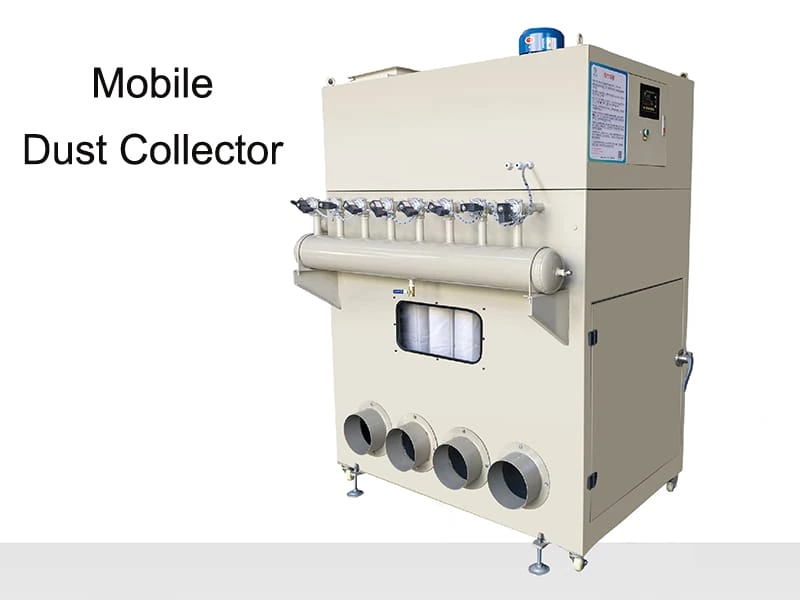
The Xinyuan mobile industrial dust collector is an integrated dry filtration unit for localized grinding, polishing and deburring stations. Its wheeled cabinet combines multiple suction connections, filter elements, automatic pulse cleaning, a fan and a control panel in one compact system. Standard configurations provide 5,000–7,500 m³/h nominal airflow with 4–7.5 kW fan power. Final filter media, inlet sizes and electrical configuration are selected according to the dust and operating conditions.
- Application
- Localized grinding and polishing dust extraction
- Product Type
- Mobile industrial dry dust collector
- Filter Cleaning
- Automatic compressed-air pulse cleaning
- Filter Element
- Filter bags or cartridges, selected for the application
- Customization
- Inlets, filter media, voltage and controls


Product Overview
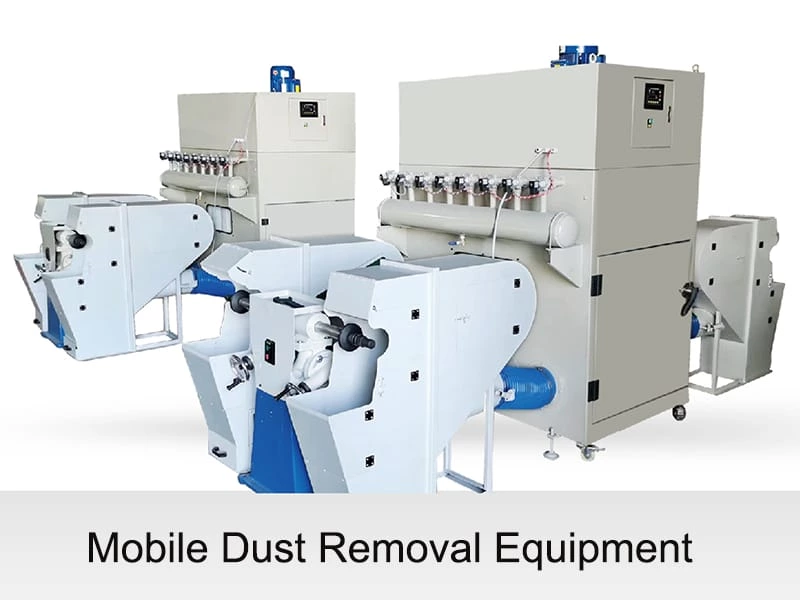
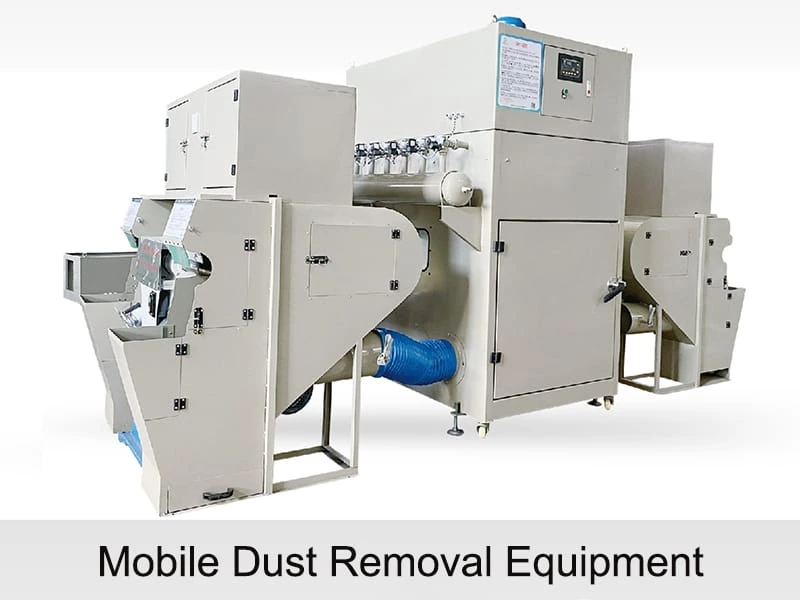
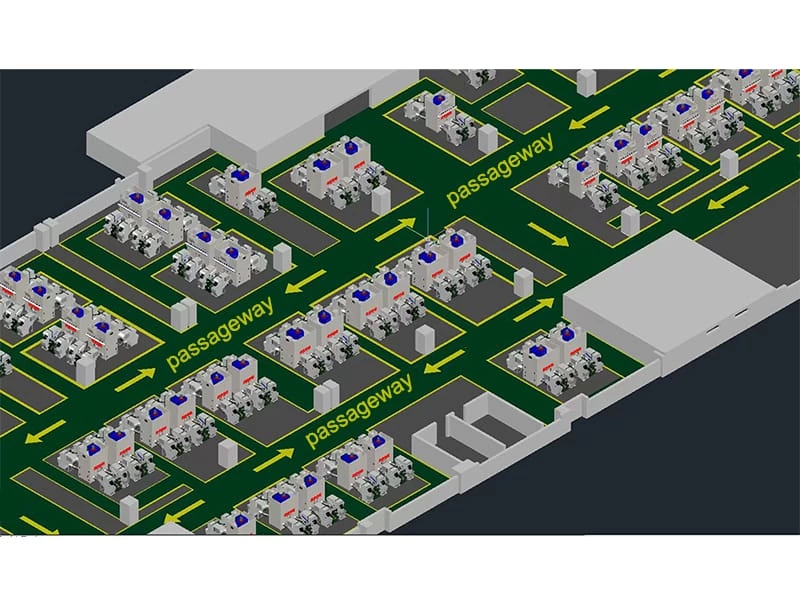
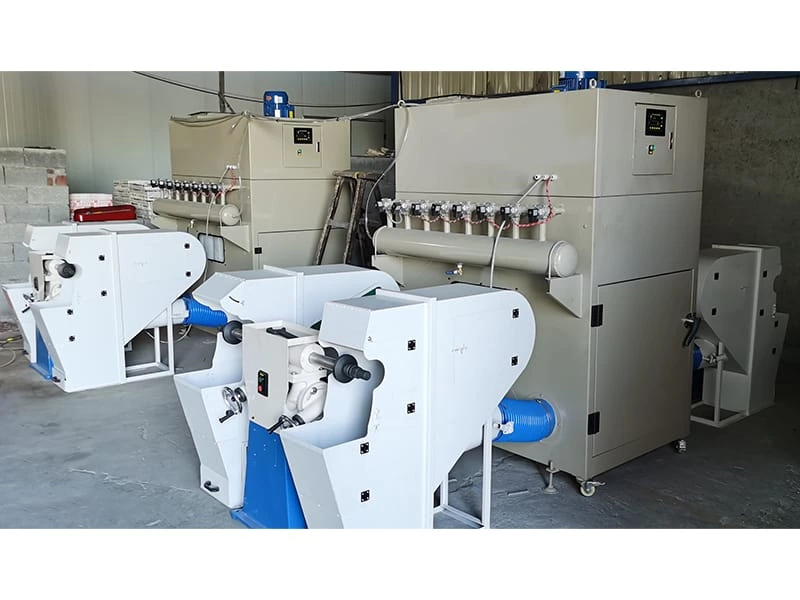
The Xinyuan mobile industrial dust collector provides localized dry dust extraction for grinding, polishing, deburring and other surface-finishing stations. It is designed for factories that need an integrated collector close to one or several dust-producing machines without installing a large centralized duct network.
The cabinet combines the fan, filter section, automatic pulse-cleaning system, dust collection section and electrical controls in one movable unit. Casters allow the collector to be repositioned when the production layout changes, while leveling feet help stabilize the equipment during operation.
Standard configurations offer 5,000–7,500 m³/h nominal airflow and 4–7.5 kW fan power. Filter media, connection sizes, voltage, controls and dust-discharge arrangements are selected for the actual process rather than treated as one universal configuration.
Typical Applications
This mobile dust collector can be considered for localized dry dust generated by:
-
metal grinding and polishing machines;
-
deburring and edge-finishing stations;
-
dry sanding and surface preparation;
-
hardware and metal-parts finishing;
-
temporary or frequently relocated production stations;
-
workshops where a centralized dust collection system is not practical.
Application suitability must be reviewed before selection. Dust composition, particle size, temperature, moisture, oil content, spark load, toxicity and combustibility all affect the filtration and safety design.
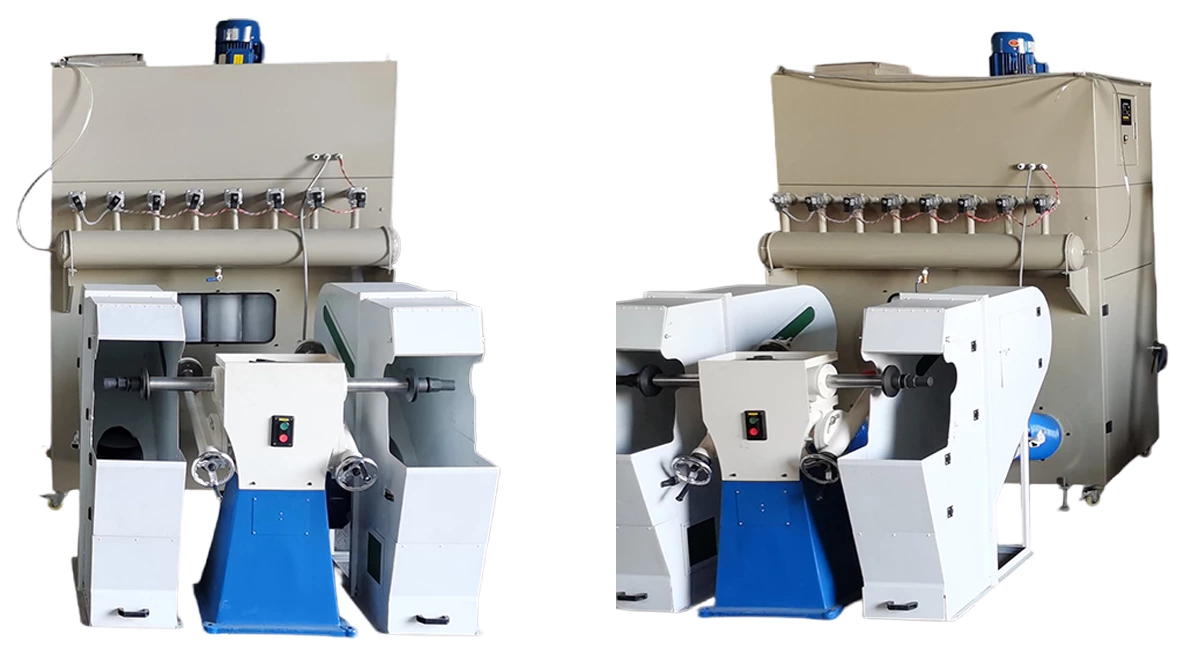
Key Features
Mobile, Integrated Cabinet
The fan, filter chamber, pulse-cleaning components and controls are installed in one enclosure. This reduces field assembly and makes the unit easier to relocate than a fixed central collector.
Multiple Suction Connections
The illustrated unit has four front connection ports for short branch ducts or machine extraction points. The required number and diameter of inlets must be matched to the airflow demand and static pressure of the connected machines.
Automatic Pulse Cleaning
Compressed-air pulses remove accumulated dust from the filter elements during the cleaning cycle. Regular cleaning helps control filter resistance and maintain stable airflow. Pulse settings and compressed-air requirements are determined by the selected filter media and dust loading.
Replaceable Filter Elements
Filter bags or cartridges can be selected according to the dust characteristics and required filtration performance. Access panels support inspection and replacement during scheduled maintenance.
Integrated Fan and Noise Control
The built-in fan creates the negative pressure required to capture dust at the source. A silencer can be fitted at the fan outlet. The brochure reference noise value is ≤75 dB(A); the final value must be confirmed together with the operating point and measurement conditions.
How the Mobile Dust Collector Works
-
The fan creates negative pressure at the connected grinding or polishing station.
-
Dust-laden air enters the collector through the front suction connection or connected ductwork.
-
The filter elements retain airborne particles while cleaned air passes to the outlet.
-
As dust accumulates, compressed-air pulses clean the filter surfaces.
-
Released dust falls into the collection section for scheduled removal.
Capture performance depends on the complete system, including the hood design, pickup location, duct diameter, duct length, airflow balance and operating condition of each connected machine. Collector airflow alone does not guarantee effective source capture.
Reference Technical Data
| Parameter | Reference configuration |
|---|---|
| Equipment type | Mobile industrial dry dust collector |
| Typical process | Localized grinding, polishing and deburring |
| Fan power | 4–7.5 kW |
| Nominal processing airflow | 5,000–7,500 m³/h |
| Filter element | Filter bags or cartridges, application-dependent |
| Cleaning method | Automatic compressed-air pulse cleaning |
| Suction connections | Four front ports shown; quantity and diameter configurable |
| Reference filtration efficiency | Up to 99.9%, depending on particle size, filter media and test conditions |
| Reference outlet dust concentration | <20 mg/m³; a project-specific design below 10 mg/m³ may be evaluated |
| Reference noise level | ≤75 dB(A), subject to operating and measurement conditions |
| Reference overall dimensions | 1500 × 1400 × 2300 mm |
| Mobility | Casters and adjustable leveling feet |
| Electrical supply | Project-specific |
| Compressed-air requirement | Project-specific |
The values above are brochure reference data, not unconditional performance guarantees. Final performance, dimensions and configuration must be stated in the approved technical proposal after the dust and process conditions are confirmed.
Configuration Options
Depending on the application, the mobile collector can be configured with:
-
application-matched filter bags or cartridges;
-
customized inlet quantity and connection diameter;
-
localized hoods and short connection ducts;
-
alternative motor voltage and frequency;
-
differential-pressure monitoring;
-
automatic pulse-cleaning controls;
-
outlet silencer;
-
project-specific dust collection or discharge arrangement;
-
electrical control and interlock options;
-
surface finish and cabinet material options where required.
Only list an option in the quotation when it is included in the proposed scope of supply.
Mobile or Centralized Dust Collection?
Choose a mobile collector when the process involves a small number of localized machines, short duct connections, moderate airflow and a production layout that may change.
A centralized baghouse is generally more suitable when many machines operate simultaneously, the extraction network is extensive, the total airflow is high, or one system must serve a complete production area.
For multi-line or high-volume projects, see our Centralized Industrial Baghouse Dust Collector solution.
Safety and Application Review
The standard unit is not intended for high-temperature gas or for flammable or explosive dust. Grinding and polishing dust can present different risks depending on the material and process. Before quotation, identify whether the dust is combustible, explosive, toxic, corrosive, oily, sticky or accompanied by sparks.
Do not assume that a standard dry collector is suitable for aluminum, magnesium, titanium, wood, plastic or mixed combustible dust. These applications require a documented hazard review and may require a different collection method, explosion protection, spark control, grounding, isolation or other project-specific measures under the applicable local regulations.
Clean-air recirculation into the workshop must also be evaluated against the contaminant, filtration performance and local occupational-health requirements.
Information Required for Selection and Quotation
Please provide the following information so our engineers can select the collector and prepare a technical proposal:
-
Workpiece material and dust composition;
-
Grinding, polishing or deburring process description;
-
Number of machines and how many operate at the same time;
-
Existing hood or pickup-point drawings and connection sizes;
-
Required airflow or current extraction performance, if known;
-
Duct length, number of bends and proposed collector location;
-
Dust temperature, moisture, oil content and approximate loading;
-
Whether sparks or combustible/explosive dust may be present;
-
Required outlet dust concentration and applicable local standard;
-
Site voltage, frequency and available compressed air;
-
Indoor or outdoor installation conditions;
-
Any noise, footprint or control-system requirements.
Typical Scope of Supply
A project scope may include:
-
mobile collector cabinet;
-
fan and motor;
-
filter elements;
-
pulse-cleaning manifold and valves;
-
electrical control panel;
-
outlet silencer;
-
casters and leveling feet;
-
selected inlet connections;
-
operating documentation.
Hoods, external ductwork, flexible hoses, compressed-air piping, installation, commissioning and spare filter elements must be identified separately in the quotation to avoid scope ambiguity.
FAQ
What processes is this mobile dust collector designed for?
It is intended primarily for localized dry dust extraction at grinding, polishing, deburring and similar surface-finishing stations. The actual dust must be reviewed before the filter and safety configuration is selected.
Can the four inlet ports connect to four machines?
Possibly, but the number of visible ports does not by itself determine how many machines can operate at once. Simultaneous capacity depends on the required airflow at each pickup point, duct resistance, hood design and fan operating point.
How do I choose between a 4 kW and 7.5 kW fan?
Fan power is selected after calculating the required airflow and total system resistance. Selecting a larger motor without checking the hood, ductwork and filter resistance does not guarantee better dust capture.
Does the collector clean the filters automatically?
Yes. The unit uses compressed-air pulse cleaning. The cleaning sequence, air pressure and consumption are matched to the filter elements and dust loading. A suitable compressed-air supply is required.
Does it use filter bags or cartridges?
The brochure allows either filter bags or cartridges. The correct filter form and media depend on the particle size, dust characteristics, required outlet concentration and maintenance plan. Confirm the selected configuration in the quotation.
Can it collect flammable or explosive metal dust?
The standard unit must not be used for flammable or explosive dust. Combustible metal dust applications require a formal hazard review and a specially engineered solution that complies with the regulations applicable at the installation site.
What maintenance is required?
Operators should monitor filter resistance and airflow, inspect the pulse-cleaning system, empty the dust collection section, check ducts and seals, and replace filter elements when their condition or pressure loss requires it. The maintenance interval depends on dust loading and operating hours.
What should I send to receive a quotation?
Send the workpiece material, dust information, machine quantity, simultaneous operating condition, hood or connection dimensions, duct layout, power supply, compressed-air data and required emission standard. Photos or layout drawings help the engineering review.
Request a Technical Proposal
Send us your dust data, machine quantity and workshop layout. Xinyuan will review the application and propose the airflow, fan, filter media, inlet arrangement, controls and scope of supply for your grinding or polishing process.
Request a Quote
If you are interested in our products and want to know more details,please leave a message here,we will reply you as soon as we can.