English
 Español
Electroplating Filtration System Selection: 7 Factors to Check
Suspended particles in a plating bath can contribute to rough deposits and inconsistent surface appearance. An electroplating filtration system helps remove these particles, but its performance depends on the complete combination of filter media, housing, pump, piping and operating conditions.
When comparing equipment, start with the actual bath and the required filtration result. A micron rating or maximum pump flow alone does not describe how the system will perform after installation.
The following seven factors provide a practical basis for selecting electroplating filters for a new line or reviewing an existing filtration circuit.
1. Confirm Bath Chemistry and Material Compatibility
Identify the process solution, chemical concentrations, normal operating temperature and any cleaning conditions the equipment will encounter. A description such as “nickel plating” or “acid solution” is too broad for final material selection.
Compatibility must cover every wetted component: the housing, pump internals, pipework, valves, seals, cartridge core and filter medium. A suitable housing does not make an unsuitable seal or cartridge acceptable.
For a PP chemical filter housing, ask the supplier to confirm suitability for the specified solution and temperature. Other applications may require different materials.
Also request the allowable operating pressure at the actual temperature. Chemical resistance, temperature limits and pressure ratings must be checked together using the selected equipment's technical data.
2. Calculate the Required Operating Flow
Use the tank's working solution volume and a process-approved filtration turnover target to establish an initial flow requirement:
Required filtration flow (L/h) = Working solution volume (L) × Target turnovers per hour
For illustration, a 1,000 L bath with an assumed target of three turnovers per hour would require:
1,000 × 3 = 3,000 L/h = 50 L/min
This is a calculation example, not a recommended turnover rate for every plating bath or a rating for a particular product. The target must reflect the actual process, contamination load and required solution cleanliness.
The required flow must pass through the filter media under installed operating conditions. Flow diverted around the filter does not count as filtered flow.
A theoretical turnover also does not mean that every portion of a mixed bath has passed through the filter exactly once. Tank circulation and the positions of suction and return connections affect how effectively particles reach the filtration circuit.
3. Specify Particle Retention, Not Just a Micron Number
A filter labelled “5 micron” cannot be compared reliably with another 5-micron filter without additional information. Ask whether the rating is nominal or absolute, what removal efficiency it represents and which test method was used.
The purchase specification should identify the particle size of concern, required retention performance, media construction and acceptable operating pressure drop.
Selecting finer media without reviewing the rest of the system may reduce usable flow or shorten the service interval. Filter area and dirt-holding capacity should be evaluated alongside retention performance.
Confirm that the cartridge end fittings and seals match the housing. Liquid bypassing an incorrectly fitted element can undermine filtration even when the selected media has the correct rating.
4. Match the Filter Medium to the Treatment Objective
Particle removal and chemical purification require different selection decisions. Common arrangements include the following:
| Filter arrangement | What buyers should confirm |
|---|---|
| Wound or melt-blown depth cartridges | Media and core compatibility, retention rating, dimensions and dirt-holding capacity |
| Pleated cartridges | Effective filtration area, chemical compatibility and permitted differential pressure |
| Bag or disc filtration | Housing arrangement, supported media grades, sealing and replacement procedure |
| Activated carbon treatment | The specific organic contaminants to be addressed and the bath supplier's approved treatment method |
Activated carbon can remove certain organic impurities, but it should be selected as a defined treatment step. Confirm the carbon grade, contact conditions, treatment frequency and any required bath checks with the chemistry supplier.
Ordinary particle filtration does not remove dissolved metal ions or restore an out-of-balance bath. Laboratory analysis and process control remain necessary.
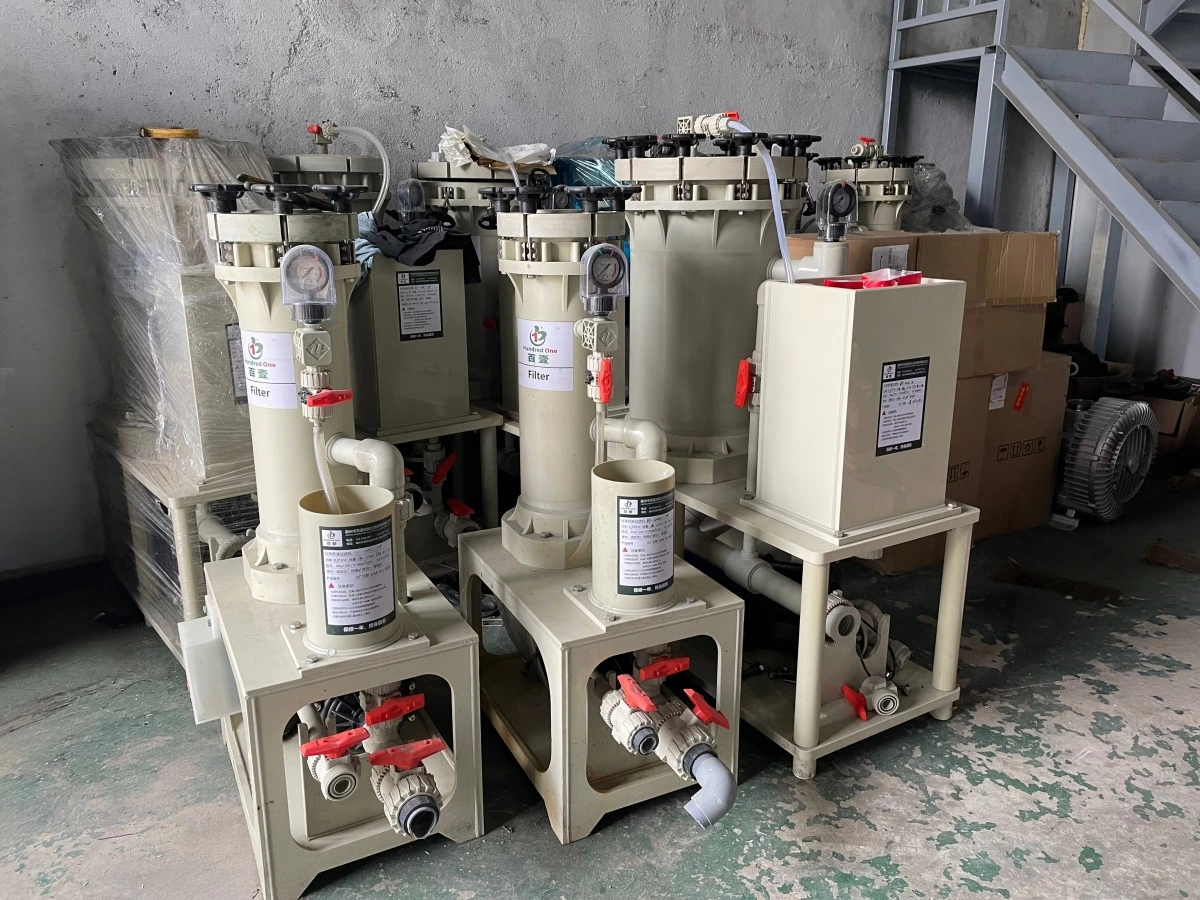
5. Select the Pump at the Actual Duty Point
The maximum flow shown in a pump catalogue is not necessarily the flow available through the installed filter. A centrifugal pump's operating point depends on its performance curve and the resistance of the connected system.
Ask the supplier to review pipe lengths and diameters, fittings, suction conditions, return arrangement and pressure losses through the housing and media. The assessment should use the actual liquid properties and operating temperature.
Check performance with clean media and at the agreed service limit. The system should provide the required filtration flow while remaining within the permitted pressure limits of its components.
When reviewing a chemical filtration unit, request the proposed pump curve, installed duty point, electrical requirements and relevant pump protection functions. Motor power alone is not a flow specification.
6. Coordinate Filtration with Tank Layout and Controls
The filtration circuit should be planned around the loaded tank, including racks or barrels, anodes and other installed components. Suction and return locations need to support circulation without obstructing handling or maintenance.
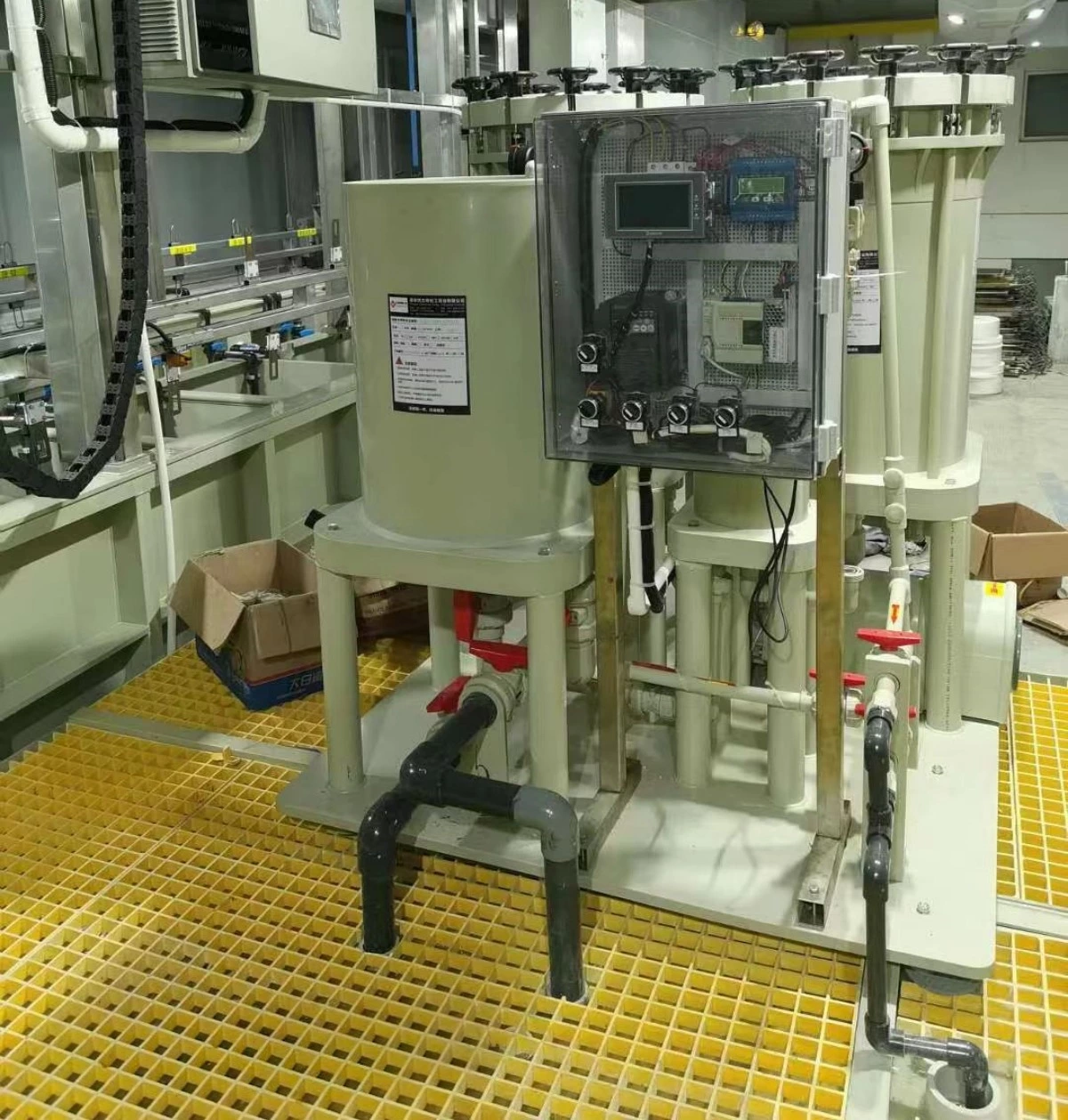
Specify which operating conditions require measurement. Depending on the process, these may include filtered flow, pressure, tank level and pump fault status.
A pump running signal confirms equipment status; it does not confirm that the required liquid flow is present. Where proof of flow is necessary, include suitable measurement and define the response to inadequate flow.
Agree on these functions with the electroplating line PLC control system. The control specification should identify the signal, alarm threshold, affected operation and restart conditions.
7. Plan Maintenance Access and Service Criteria
Check whether operators can remove the cover and filter elements without dismantling nearby pipes or interfering with the line. Include space for handling used media and collecting retained solution.
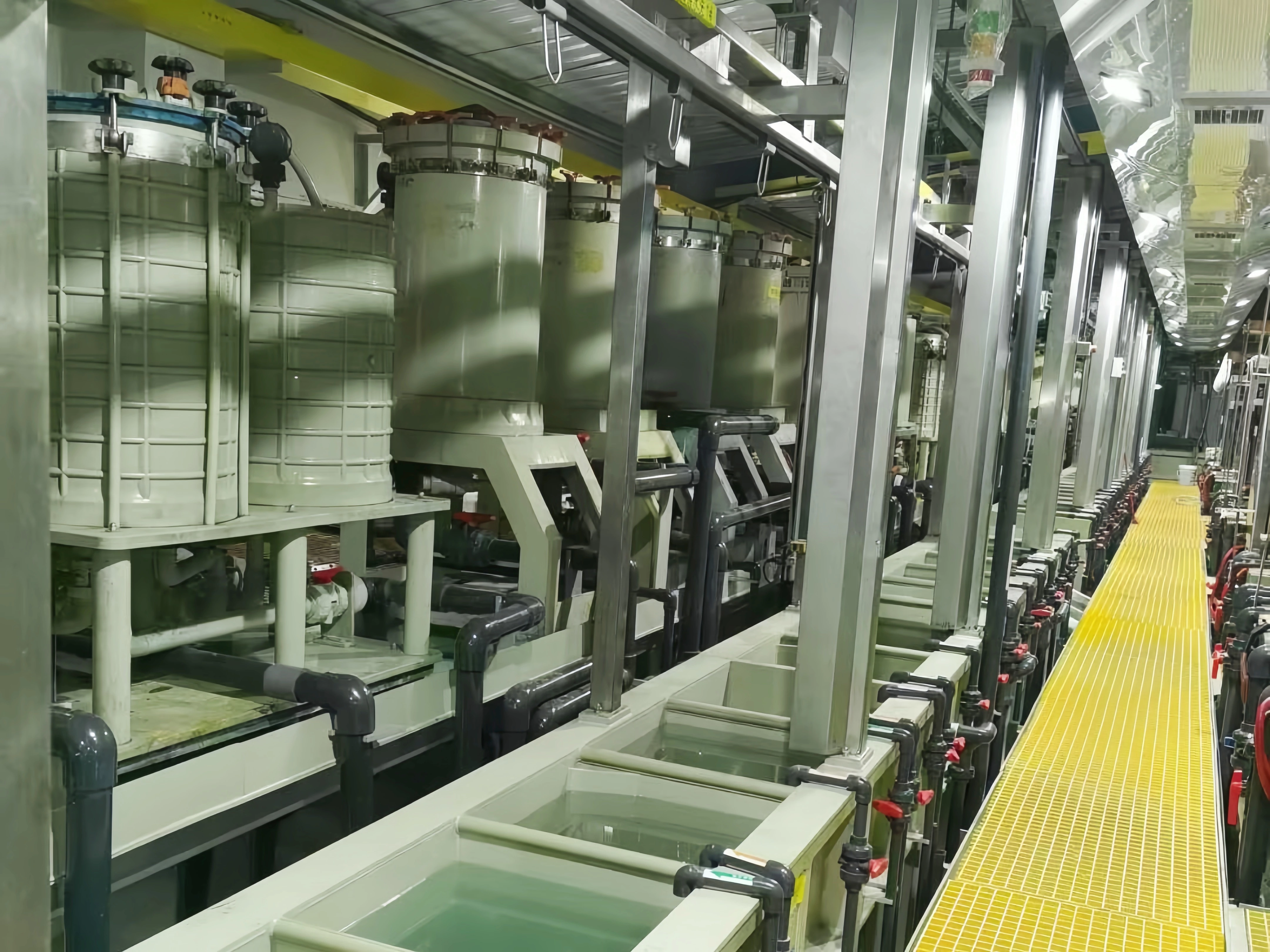
The equipment documentation should describe the approved method for isolating, depressurizing and draining the chamber before opening it.
Record baseline flow and pressure readings after commissioning. Set service criteria from the equipment limits, process requirements and monitored condition. A universal instruction to replace every cartridge after a fixed number of days will not suit every installation.
Request the replacement element specification, compatible seals and recommended spare parts with the quotation. Where filtration interruptions are unacceptable, evaluate a standby or parallel arrangement as part of the project scope.
Information to Include in a Filtration System RFQ
A clear request for quotation helps suppliers propose comparable equipment. Provide the following information for each bath requiring filtration:
| Information | Details to provide |
|---|---|
| Bath identification | Process name, chemistry supplier and available technical data |
| Operating conditions | Working volume, temperature range and relevant cleaning conditions |
| Filtration objective | Particle problem, cleanliness requirement and any approved carbon treatment |
| Flow requirement | Required filtered flow or the process basis for selecting it |
| Installation | Tank dimensions, proposed filter position, pipe sizes and approximate routing |
| Utilities and controls | Voltage, phase, frequency, monitoring signals and required interlocks |
| Supply scope | Housing, pump, media, valves, instruments, spares and commissioning support |
For a complete line project, include this information during automatic rack electroplating line planning, so filtration space, connections and controls can be coordinated before installation.
Frequently Asked Questions
What micron rating is suitable for electroplating filtration?
There is no single rating suitable for all baths. Selection depends on the particles to be removed, the required finish and the chemistry supplier's recommendations. Confirm the retention efficiency and test method as well as the micron number.
Can the same filter system be used for every plating solution?
No. Materials, seals, media and operating limits must match the specific solution. Sharing equipment between baths also requires an approved method to prevent chemical carryover and cross-contamination.
Is activated carbon required in every plating filter?
No. Carbon treatment addresses certain organic impurities and must follow the requirements of the particular bath. It is not a universal replacement for particle filtration or chemical analysis.
How can buyers verify the quoted filtration flow?
Ask for the pump selection and system pressure-loss basis, then agree on a commissioning measurement at the installed operating conditions. The acceptance check should identify the liquid, temperature, filter media and measurement location.
Does filtration guarantee defect-free plated parts?
No. Filtration addresses particulate contamination and, with suitable treatment media, selected impurities. Surface preparation, bath chemistry, electrical contact, current distribution and other process conditions must also be controlled.
Discuss Your Electroplating Filtration Requirements
Planning a new line or replacing an existing filter? Send your bath information, working volume, temperature, filtration objective and installation details to Autoplatingtec.
A clear specification makes it easier to compare equipment proposals and select a filtration arrangement that fits the process and maintenance requirements.