English
 Español
Electroplating Line PLC Control: 8 Functions Buyers Should Check
When comparing automatic electroplating lines, buyers often focus on tank dimensions, hoist quantity and production capacity. The control system deserves the same attention because it connects the approved process with the equipment that carries it out.
An electroplating line PLC control system can coordinate transfers, process timing and connected devices. However, a quotation that lists only a PLC brand and a touchscreen leaves many operating requirements undefined.
Before ordering, agree on the functions your production actually needs, the equipment and software included, and the tests that will demonstrate correct operation. The following eight areas provide a practical starting point.
What Does the PLC Control System Include?
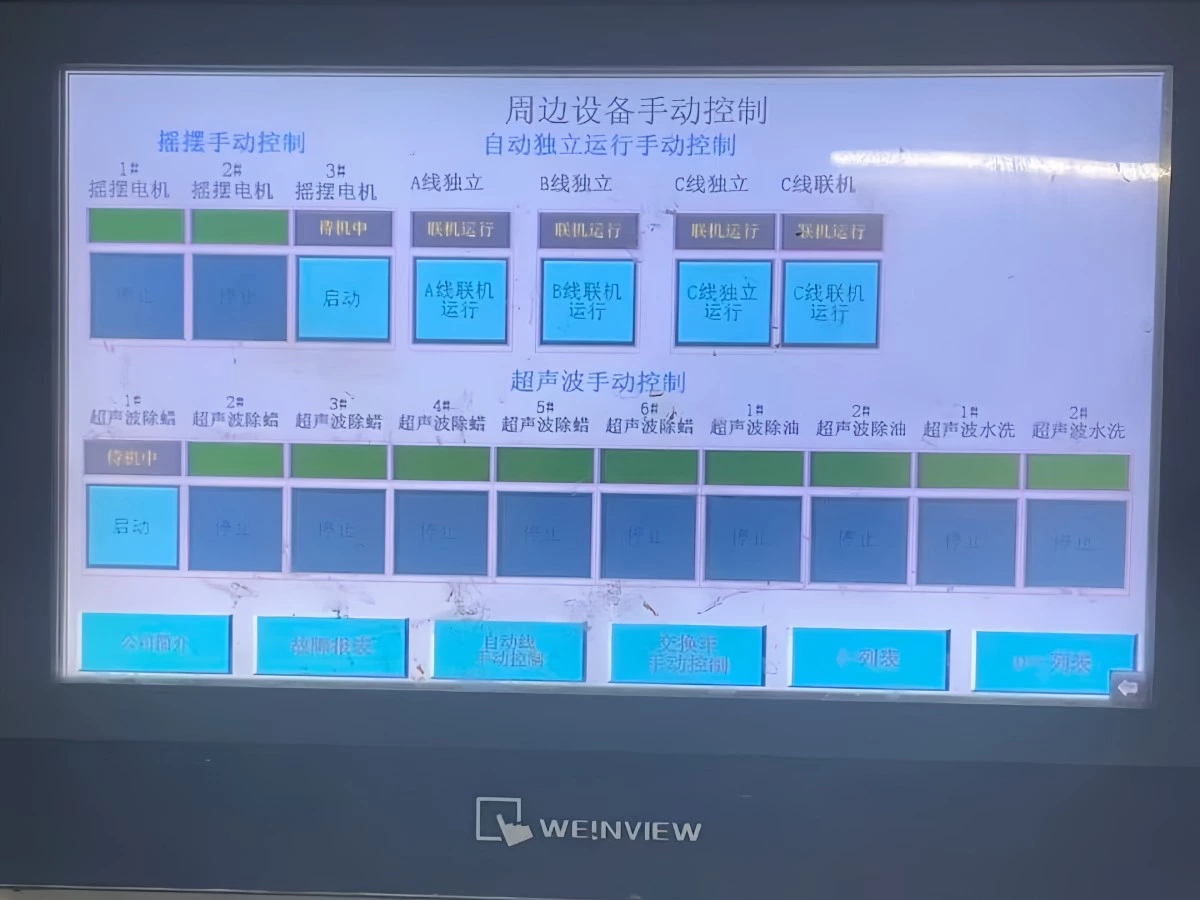
The PLC, or programmable logic controller, executes the programmed machine logic using signals from sensors and connected equipment. The HMI, or human-machine interface, allows operators to view conditions, select approved settings and respond to messages.
Scheduling, reporting and historical data storage may also involve an industrial computer or supervisory software. These functions are not automatically included simply because a line has PLC control.
For an automatic gantry rack electroplating line, review the complete control scope alongside the mechanical layout and process sequence.
1. Process Recipes and Parameter Permissions
A process recipe is the approved set of instructions for a particular part family and coating route. Buyers should confirm which parameters can be stored, selected and changed.
Depending on the process and equipment, these may include the tank sequence, treatment times, drip times and rectifier settings. Some settings apply to an individual load, while others, such as a shared bath temperature, apply to the tank. The system must handle that distinction.
Ask how recipes are identified and who may edit them. Also confirm whether a change affects only future loads or loads already being processed. Production should use an approved recipe with a clear revision history where required.
2. Hoist Scheduling and Actual Treatment Times
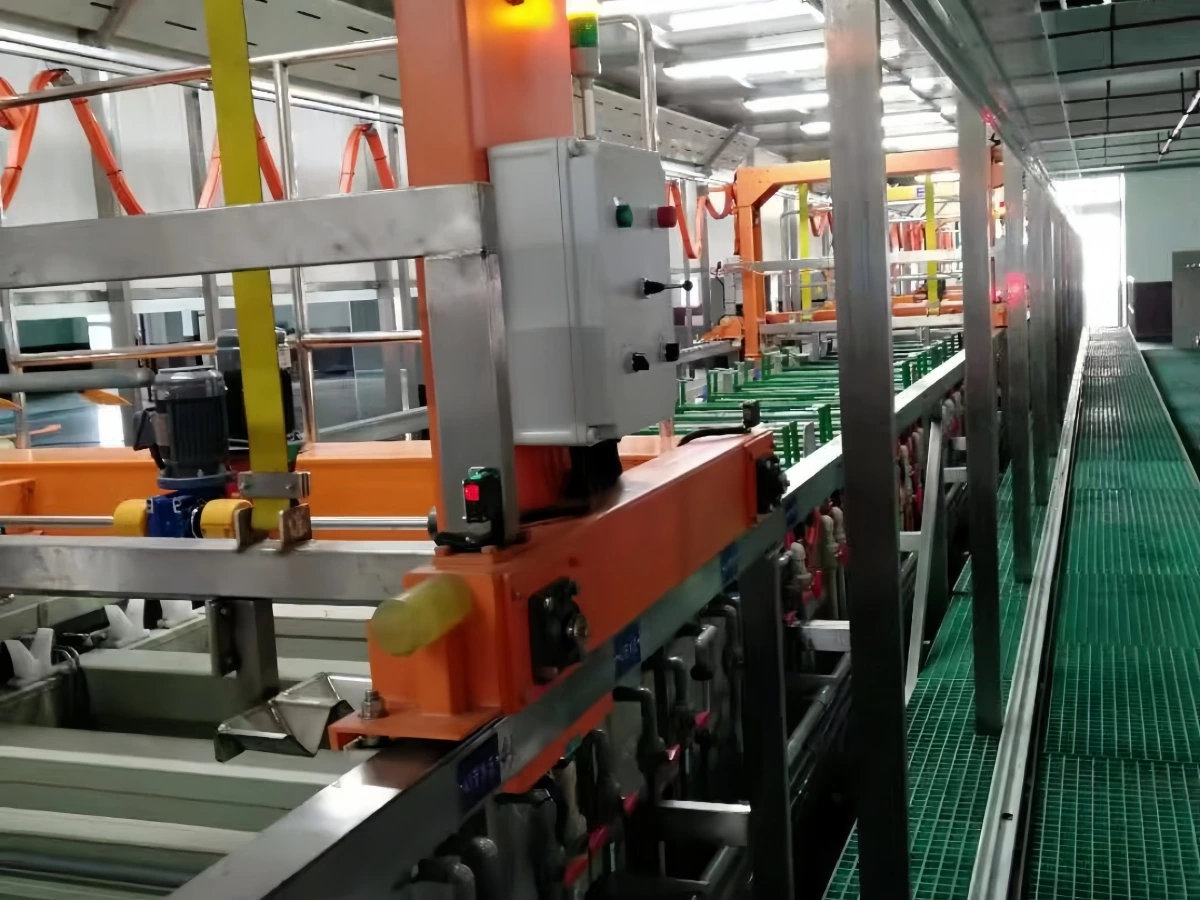
A target treatment time is useful only when the handling system can support it. Hoists must lift, drain, travel and lower loads while serving other tanks and avoiding conflicts.
Confirm whether the line uses a fixed sequence or supports different routes and treatment times. If mixed production is required, ask the supplier to demonstrate the proposed combination of recipes at the intended loading interval.
Define how immersion time is measured and what happens when a load cannot move on schedule. The control specification should also address transfer delays at process steps that are sensitive to exposure or extended immersion.
Review these requirements together with the electroplating line capacity calculation, since software cannot remove a physical tank or hoist bottleneck.
3. Rectifier Commands and Actual Feedback
Sending a current or voltage command to a rectifier does not prove that the intended electrical conditions were achieved. Buyers should distinguish between the requested setpoint and the measured output.
Confirm which operating modes are required, which measurements return to the control system, and how communication failures or output deviations are reported. Define when the plating timer starts relative to immersion and rectifier operation.
For rack plating, current settings should be reviewed against the actual plated surface area and the approved process. A partially loaded rack may need different settings from a full rack. Any automatic calculation requires reliable load data and a validated method.
4. Bath Conditions and Auxiliary Equipment Status
Prepare a tank-by-tank list of the conditions that need monitoring or control. These may include temperature, liquid level, circulation, filtration and the status of relevant exhaust equipment.
For each item, identify the sensor or feedback signal, operating range, alarm condition and required response. A pump run command, for example, is not the same as confirmed liquid flow. Specify flow feedback if the process requires proof of circulation.
Chemical measurements such as pH or conductivity require suitable instruments, installation and calibration. A PLC does not measure them by itself, and these readings do not replace all bath analysis or chemical maintenance.
5. Alarms and Interlocks with Defined Responses
An alarm tells the operator that something needs attention. An interlock prevents or changes an operation when a required condition is not satisfied. Buyers should ask for an agreed list of both.
For each condition, define the trigger, message, affected equipment, automatic response and requirements for reset or restart. Possible review items include abnormal tank level, temperature deviation, missing hoist position feedback and loss of communication with a connected device.
Distinguish process controls from machinery safety functions. Protective functions must follow the project's risk assessment and use suitable safety components. An HMI warning alone is not a protective function.
6. Operating Modes and Recovery After Interruptions
Confirm how automatic, semi-automatic and maintenance modes are selected, and which actions each mode permits. Mode changes should preserve the required protections and make equipment status clear to the operator.
Ask what happens after a power interruption, hoist fault or communication loss. Recovery planning should address load locations, retained process records, equipment readiness and authorization to resume.
Restoring the control system does not automatically make an interrupted batch acceptable. Parts may have remained in a bath too long or missed a required treatment condition. The production and quality teams need a defined method to review affected loads before release.
7. Batch Records and Traceability
If customers require production records, define the information before the control system is ordered. A live screen showing current values does not establish that historical records are being saved.
A useful record specification may include:
-
Batch or load identification and the selected recipe revision.
-
Entry and exit times at specified process steps.
-
Measured temperature, current or voltage where required and available.
-
Relevant alarms, interruptions and authorized parameter changes.
Agree on sampling intervals, retention periods, export formats, time synchronization and backup arrangements. The recording method should be able to capture the deviations you need to investigate.
Process records support traceability; they do not replace coating inspection or the customer's product acceptance requirements.
8. Backups, Documentation and Future Changes
The control package should include the information needed to operate and maintain the agreed system. Confirm the scope of electrical drawings, input/output lists, alarm descriptions, operating instructions and operator training.
Agree on delivery of recoverable backups for the PLC, HMI and any supervisory software, together with the licenses and access rights needed for the agreed maintenance work. Define who is responsible for restoring the system after a hardware failure.
If future barcode scanning, factory reporting or remote support is required, specify it separately. Identify the interfaces, software work, authorization controls and additional costs instead of relying on a general statement that the system is expandable.
How to Verify the Control Functions Before Shipment
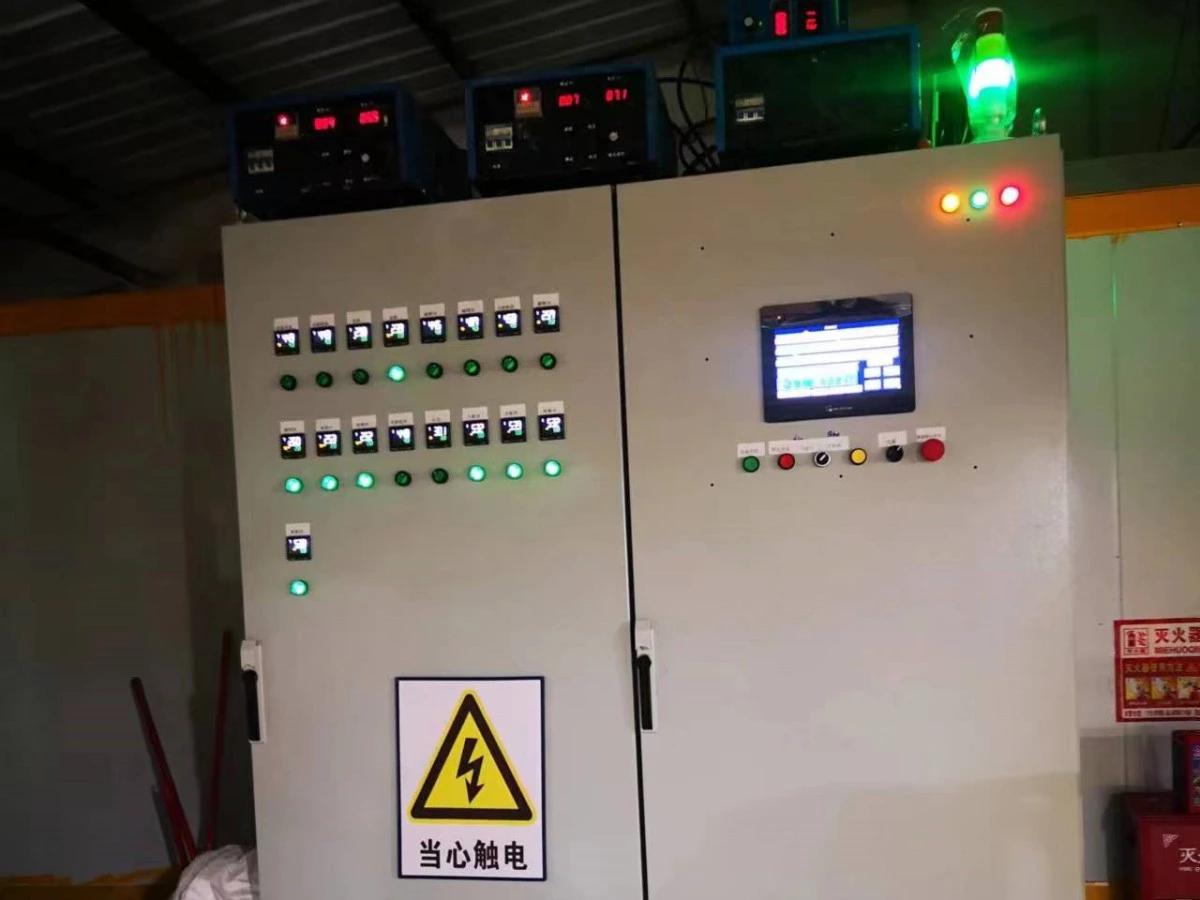
Turn the agreed requirements into observable acceptance checks. A demonstration of the line moving through one normal cycle is only part of the evidence.
| Review area | Evidence to request |
|---|---|
| Recipe handling | Correct recipe selection, parameter limits and editing permissions |
| Timing and transfers | Recorded tank entry and exit events for the agreed production scenario |
| Device feedback | Clear distinction between commanded settings and measured values |
| Abnormal conditions | Qualified personnel demonstrate agreed fault responses using an approved test method |
| Records and recovery | Retrieval of a sample batch record and demonstration of the agreed backup or recovery procedure |
Agree which checks belong in the Factory Acceptance Test for the electroplating line and which require site commissioning.
Simulated inputs can help verify control logic. They do not prove actual bath performance or coating quality, which require suitable process conditions and production trials.
Frequently Asked Questions
Is the PLC brand enough to compare two control systems?
No. Buyers also need to compare the programmed functions, connected instruments, operator interface, documentation and acceptance criteria. The same controller brand can be used in systems with very different operating capabilities.
Can one automatic electroplating line run different recipes?
It may be possible if the tank arrangement, bath chemistry, handling system and control design support the required routes. Confirm the permitted combinations and their effect on output. Recipe selection cannot make incompatible processes share a bath.
Does PLC control guarantee uniform coating thickness?
No. Thickness also depends on factors such as part geometry, rack contacts, current distribution, bath condition and the approved plating process. Automation can help repeat specified conditions, while inspection is still needed to verify the result.
Are batch reporting and remote access standard features?
Not necessarily. They may require additional instruments, software, storage, network equipment or licenses. List the required functions in the quotation and confirm how they will be tested and supported.
Discuss the Control Requirements for Your Plating Line
When planning a new line, provide your part information, coating sequence, required output, loading method and workshop layout. Include any requirements for process records, operator language, customer reporting and future system connections.
Contact our team to discuss your electroplating line project. A clear control specification helps align the equipment proposal, operating requirements and acceptance tests before manufacturing begins.