English
 Español
Plastic Electroplating Lines For Automotive And Sanitary Applications
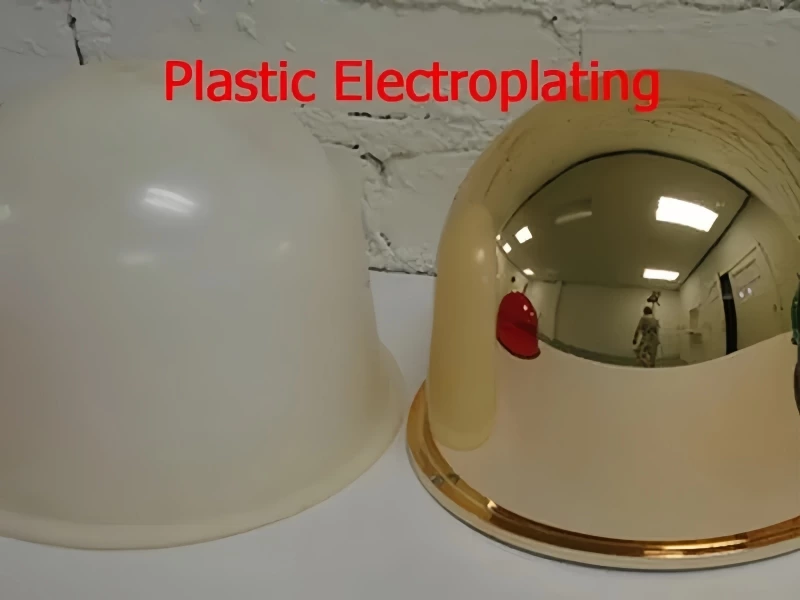
Plastic electroplating is widely used in automotive trim, bathroom fittings, home appliances, and decorative components. Compared with metal substrates, plastic parts require a more controlled plating process because surface activation, adhesion, and current distribution are more sensitive during production.
For manufacturers producing ABS or ABS+PC parts, a dedicated plastic electroplating line is important for maintaining coating consistency, corrosion resistance, and production efficiency.
Why Plastic Electroplating Is More Challenging
Unlike metal parts, plastic substrates are non-conductive. Before electroplating can begin, the surface must go through multiple pretreatment stages to create proper adhesion between the plastic base and the metal coating.
Several problems are common in plastic plating production:
- Poor adhesion after thermal cycling
- Uneven nickel or chrome coverage
- Blistering and peeling
- Edge burning on complex shapes
- High reject rates caused by unstable chemical control
These issues become more serious in industries such as automotive and sanitary ware, where appearance and corrosion resistance standards are strict.
Typical Process of a Plastic Electroplating Line
A standard metallized plastic production line normally includes:
- Degreasing
- Etching
- Neutralization
- Activation
- Electroless nickel plating
- Acid copper plating
- Semi-bright nickel plating
- Bright nickel plating
- Chrome plating
- Rinsing and drying
Different products may require different process combinations depending on coating specifications and corrosion resistance requirements.
Key Features of a Dedicated Plastic Plating Line
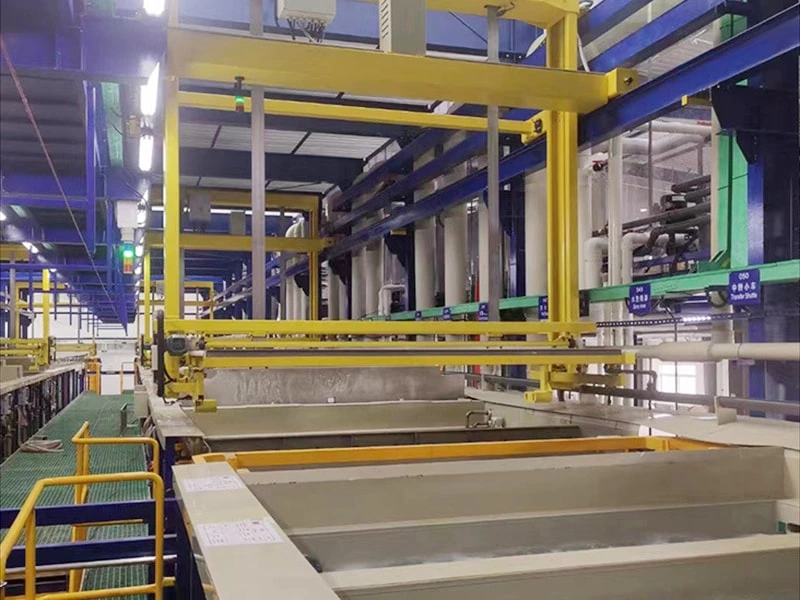
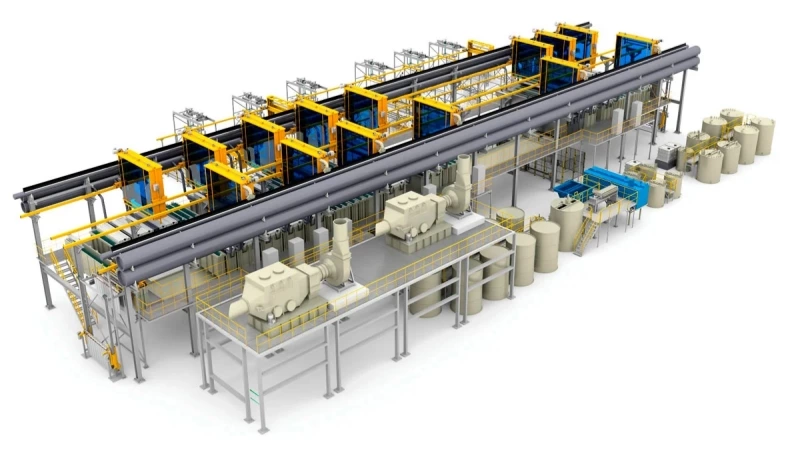
A professional electroplating line is not only about tank arrangement. Stable production depends on process control, automation, and equipment reliability.
Automated Chemical Dosing
Automatic dosing systems help maintain a stable chemical concentration throughout production. This reduces manual adjustment errors and improves coating consistency.
Programmable Rectifier Control
Accurate rectifier control helps stabilize current output during nickel and chrome plating. This is especially important for complex plastic parts with uneven geometry.
Customized Rack Design
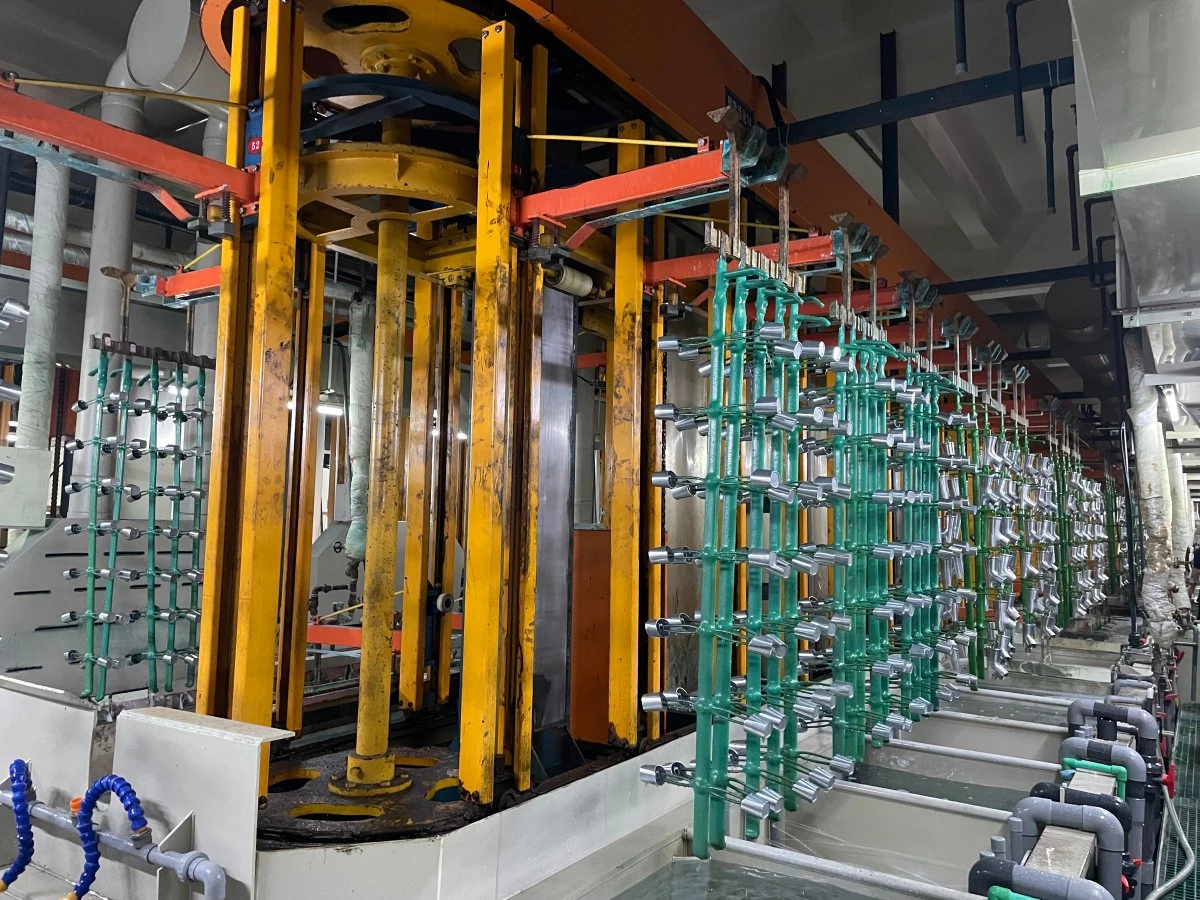
Proper rack engineering improves conductivity and coating distribution while reducing contact marks and defective areas.
Multi-Stage Filtration System
Continuous filtration helps remove impurities from plating solutions and improves surface finish quality.
Wastewater Treatment Integration
Modern electroplating plants increasingly require integrated wastewater recycling systems to reduce operating costs and support environmental compliance.
Applications of Metallized Plastic Parts
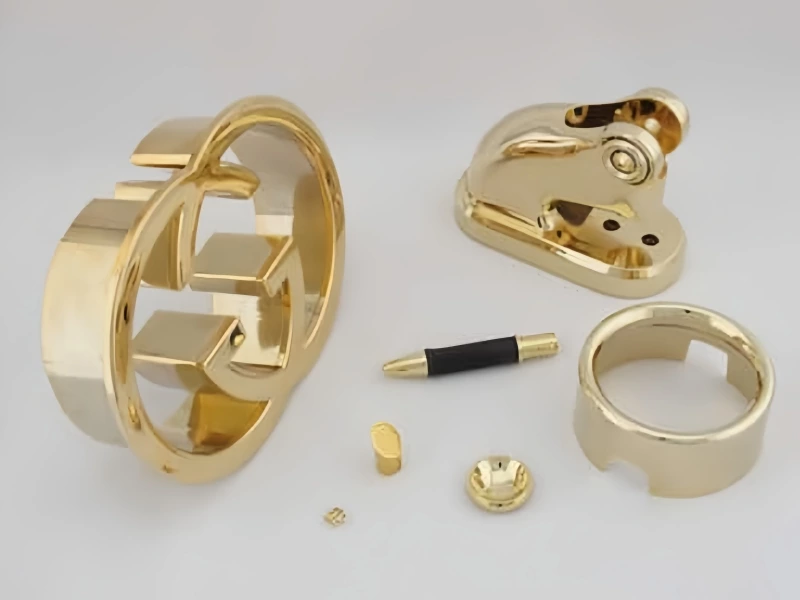
Plastic electroplating is commonly used in the following industries:
Automotive Industry
- Front grille trims
- Interior decorative bezels
- Door handles
- Emblems
- Mirror components
Automotive customers usually require high corrosion resistance and stable appearance quality across large production volumes.
Sanitary Ware Industry
- Faucet decorative parts
- Shower accessories
- Bathroom trim components
For sanitary products, surface brightness, adhesion, and long-term humidity resistance are critical.
Home Appliance Industry
- Decorative panels
- Control knobs
- Appliance trims
Manufacturers often use metallized plastic parts to reduce weight while maintaining a metallic appearance.
Factors That Affect Plating Quality
Several factors directly influence the final plating result:
- Stability of the etching process
- Activation efficiency
- Current density control
- Rack conductivity
- Filtration performance
- Bath temperature consistency
- Rinsing quality
In many cases, unstable pretreatment causes more defects than the plating stage itself.
Automation Trends in Plastic Electroplating
As labor costs and quality requirements continue to increase, more manufacturers are adopting automated electroplating systems.
Common upgrades include:
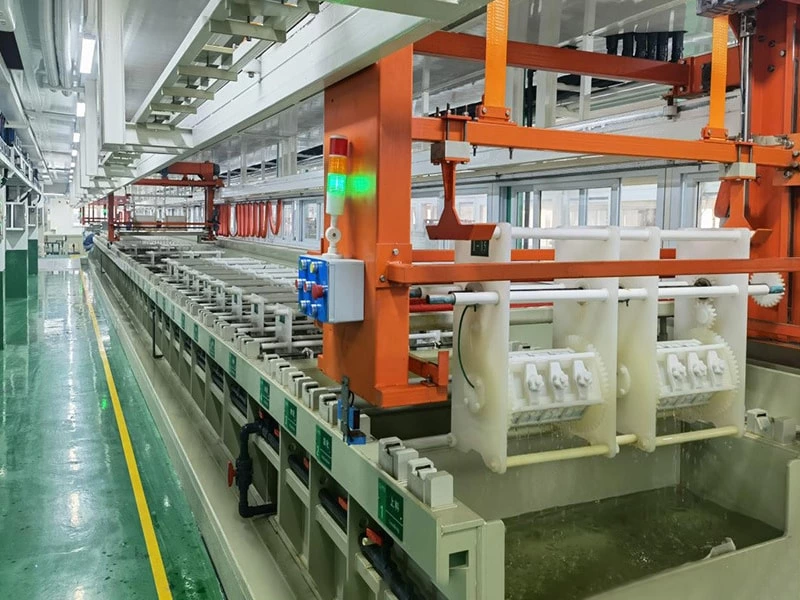
- Automatic hoist transfer systems
- PLC control systems
- Chemical monitoring systems
- Automatic dosing units
- Production data tracking
Automation helps improve repeatability, reduce manual operation errors, and increase production efficiency.
Choosing the Right Electroplating Line Supplier
When selecting an electroplating equipment supplier, manufacturers usually evaluate:
- Experience with plastic plating applications
- Line customization capability
- Process support
- Wastewater treatment solutions
- Automation integration
- After-sales technical service
Different products require different line configurations, so process experience is often as important as equipment manufacturing capability.
Conclusion
Plastic electroplating remains an important manufacturing process for industries that require both lightweight materials and a metallic surface appearance. A stable and well-designed electroplating line helps manufacturers improve coating quality, reduce defects, and maintain long-term production consistency.
With increasing requirements for automation and environmental compliance, modern metallized plastic plating lines are moving toward higher efficiency, better process control, and lower operating costs.